Induction vs Electric Cooktop: Which Is Better? (October 2026)
For induction vs electric cooktop decisions, choose induction for faster heat response with magnetic pans, or radiant electric to keep nonmagnetic cookware. Check pan fit, wiring and installation needs before choosing.
On this page (12 sections)
- Induction vs electric cooktop: what changes when you cook?
- Can you keep your current cookware?
- Who should choose the Duxtop portable burner?
- Does induction save enough energy to justify switching?
- Which cooktop is easier to clean and care for?
- What setup checks should come before you order?
- Who should choose the Empava built-in cooktop?
- Does a portable or built-in cooktop fit your routine?
- Who should choose the Frigidaire Gallery cooktop?
- What common mistakes should new induction users avoid?
- Related guides for choosing a cooktop
- Induction vs electric cooktop: which should you choose?
Choose induction for quick heat changes with magnetic pans, or radiant electric for broader cookware compatibility. The induction vs electric cooktop decision comes down to your cookware, cooking habits and the work needed to fit the appliance.
Induction is also electric: it heats compatible pans through a magnetic field. Here, “electric cooktop” means the traditional radiant type with heating elements beneath glass.
The 3 products below are induction options for different kitchens. They help you choose a format once you've decided on the heating method; no radiant electric model is included in this comparison.
 Best for family kitchen remodels
Empava Ease 30-Inch Built-In Induction Cooktop
Induction vs electric cooktop: what changes when you cook?
Induction changes pan heat quickly; radiant electric holds heat longer in its cooking surface. That difference matters most when a sauce starts bubbling too hard or you need to stop browning food.
On induction, reducing power quickly reduces the heat being generated in the pan. A thick pan still holds stored heat, so turning down the burner won't instantly cool its contents.
Radiant electric heats an element, then the glass, then the pan. After you reduce the setting, stored heat can keep cooking the food, which means you may need to turn it down earlier.
Which induction or electric cooktop suits your meals?
Induction suits frequent heat changes, such as bringing a sauce to a boil and then lowering it to a simmer. Radiant electric works well when you can plan around a slower response.
For pasta, soups and other longer cooking tasks, either type can do the job. The benefit of induction becomes more noticeable when you often switch between high and gentle heat during the same recipe.
Neither heating method fixes a thin pan with uneven heat spread. Pan construction, base size and stirring still matter, especially with thick sauces and foods that scorch easily.
Will induction make the kitchen cooler?
Induction puts heat into the pan without first heating a radiant element and its glass cover. It can reduce heat around the cooking area, but hot food, steam and cookware still warm the room.
The glass beneath an induction pan also gets hot through contact. Treat both types as hot surfaces during and after use, and keep handles turned away from counter edges.
Can you keep your current cookware?
Keep your pans if their bases suit the new cooktop. Induction needs magnetic cookware, while radiant electric accepts more materials, subject to the appliance and cookware instructions.
Hold a magnet against each pan's underside. A firm hold suggests induction compatibility, but you must also check the required base diameter and whether the bottom sits flat.
Cast iron and many stainless steel pans work on induction. Some aluminum and copper cookware has a magnetic base layer, so check each piece rather than judging by its main material.
Pay special attention to your smallest saucepan and widest skillet. A small base may not register on a zone, while a very wide pan can heat unevenly if its base extends well beyond the heating area.
Avoid building a replacement cookware set around labels alone. Start with the pans you use most often, then compare their base measurements with the cooktop's requirements.
Our explanation of what an induction cooktop is covers the heating process. The complete induction cooktop guide helps connect cookware choices with the rest of your setup.
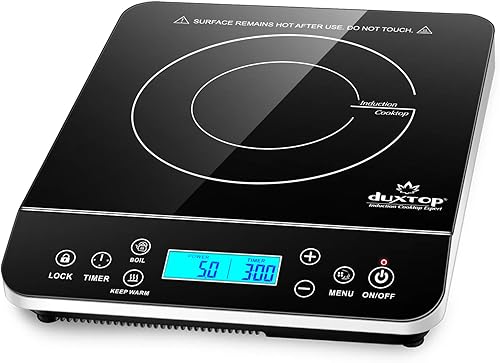
Who should choose the Duxtop portable burner?
Choose the Duxtop for an extra cooking zone or a kitchen where permanent changes aren't practical. Skip it as your only appliance if dinner usually needs several pans cooking together.
At 14 inches wide, 11.4 inches deep and 6.2 pounds, it can move into storage after cooling. Allow room for the appliance, its cord and required ventilation, rather than measuring only the footprint.
Its power settings run from 100 to 1,800 W, with 20 choices in both power and temperature modes. The timer runs up to 10 hours, and a control lock helps prevent accidental setting changes.
The Duxtop requires magnetic-bottom cookware with a minimum diameter of 5 inches. Its pan detection shuts it off after 60 seconds without suitable cookware, so a tiny saucepan may need replacing.
This format also gives you a way to use induction alongside an existing radiant cooktop. Keep nonmagnetic pans on the original appliance while assigning compatible cookware to the portable burner.
Does induction save enough energy to justify switching?
Treat efficiency as a benefit, not the whole reason to replace a working cooktop. Induction generally transfers heat into cookware more efficiently, but actual energy use depends on the cooking task.
Duxtop states 83% energy efficiency for its burner. That figure doesn't provide a household savings estimate or account for cookware replacement and electrical work.
A cooktop's maximum wattage shows its potential power draw, not its total energy use for dinner. How long you cook, which zones you use and the selected settings all affect consumption.
For either type, match the pan to the heating area and use a lid when the recipe allows. These habits reduce wasted heat without requiring a different appliance.
Which cooktop is easier to clean and care for?
Both need glass-safe care, but induction can leave fewer spills baked onto the surrounding surface. The hot pan and the glass beneath it can still burn food onto an induction cooktop.
Let the appliance cool as directed, then use the recommended cleaner and a soft cloth. Keep abrasive pads and unsuitable scraping tools away from the surface.
Lift heavy cookware instead of sliding it, and keep pan bottoms clean. Grit trapped beneath a pan can scratch glass as the pan moves.
Sugary spills need the manual's specific removal procedure because they can damage glass. Read that procedure before cooking jam or syrup so you know how to respond without touching hot glass.
For portable units, keep vents clear and avoid letting cleaning liquid enter the body. Duxtop specifically directs you to let its burner cool before cleaning.
Our guide to an induction cooktop mat and protector explains another common care question. Use a mat only when the cooktop manufacturer permits it.
What setup checks should come before you order?
Check the electrical supply, available space and installation instructions before choosing a model. A cooktop's advertised width doesn't tell you whether it fits an existing countertop opening.
The Duxtop uses a 110/120 V, 15 A outlet. Check what else shares that circuit, since another high-draw appliance can overload it while the burner is running.
Don't assume an extension cord or power strip is suitable. Follow the appliance's connection instructions and arrange access to the right outlet.
The Empava is a 7,400 W hardwired drop-in cooktop. Have an electrician confirm its required voltage, circuit and wiring from the installation manual.
The Frigidaire requires 240 V and a 30 A minimum circuit. An existing electric cooktop connection still needs checking against those requirements.
For built-in models, confirm cutout dimensions, countertop thickness, ventilation and clearance around drawers or an oven. Measure the opening itself rather than using the old cooktop's outside width.
Our guide to induction burner wattage explains power choices. For outlet planning, read whether an induction burner can plug into any outlet.
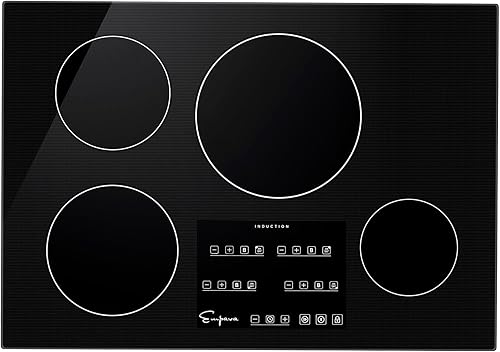
Who should choose the Empava built-in cooktop?
Choose the Empava for a planned kitchen remodel where several dishes need separate zones. Skip it if you need a plug-in appliance or can't make the required countertop and wiring changes.
Its 30-inch surface has 4 cooking zones, boost mode and separate zone timers. Those timers suit meals where rice, vegetables and a main dish start at different times.
A child lock, residual heat display and overheating prevention support everyday use. These features don't replace supervision, and a timer doesn't tell you whether food has reached the right doneness.
Before committing, consider how your largest pans will sit together. Four zones are useful only if the cookware you normally use fits without crowding handles or blocking controls.
Does a portable or built-in cooktop fit your routine?
Choose the number of zones around your busiest normal meal. A single burner suits one-pan cooking, while a built-in surface lets you manage several pots without swapping them.
Picture making your usual dinner from start to finish. If you need to boil pasta, warm sauce and cook vegetables together, one portable zone will require a different sequence.
A portable burner also takes up preparation space while in use. Check that you can safely chop, set down hot cookware and reach ingredients without crowding the appliance.
For more format choices, read our portable induction cooktop guide. If one zone feels limiting but a full replacement is unnecessary, compare single vs double induction cooktops.
Who should choose the Frigidaire Gallery cooktop?
Choose the Frigidaire if front controls suit your reach and its element layout matches your cookware. Skip it if you need a portable setup or your installation can't meet its electrical requirements.
Its 30-inch surface has two 8-inch and two 7-inch elements. Compare those sizes with the bases of your everyday pans, especially if you often use a wide skillet.
The capacitive touch controls sit at the front and use a white display. Think about their position with cookware in place, including where handles and large pans will sit.
Automatic pan detection senses cookware on the cooking surface. You still need compatible pans, so check the pots you plan to keep before treating this as a straightforward replacement.
What common mistakes should new induction users avoid?
Start with moderate power and learn how each pan responds. Induction's quick heat response makes familiar settings from a radiant cooktop a poor guide at first.
Don't preheat an empty pan on maximum power out of habit. Use the cookware maker's guidance, and reserve boost or high power for tasks that call for it.
Keep pan bases centered over their zones. Our guide to matching burner size with pan size explains why base diameter matters more than the width across a pan's rim.
Don't treat a displayed temperature setting as a direct reading of food temperature. Stir sauces, watch delicate foods and use an appropriate food thermometer when needed.
Some layered cookware can produce a high-pitched sound on induction, as Duxtop notes. A sound from one pan doesn't mean every compatible pan will behave the same way.
Keep touch controls clean and dry, and learn the lock and timer functions before a busy meal. Our guide to using a portable induction cooktop walks through the basic routine.
For the broader benefits and limits, read whether portable induction cooktops are worth it.
Related guides for choosing a cooktop
Use the guide that resolves your next buying decision. Cookware, zone count and installation should be settled before you compare extra features.
- Learn the heating basics in what an induction cooktop is.
- Compare layouts in single vs double induction cooktops.
- Plan a countertop setup with the portable induction cooktop guide.
- Compare another heating method in induction vs gas cooktops.
- Browse permanent options in our built-in induction cooktop guide.
Induction vs electric cooktop: which should you choose?
Pick induction when responsive heat and compatible cookware fit your routine. Pick radiant electric when keeping suitable nonmagnetic pans matters more than faster heat changes.
Choose the Duxtop for a movable extra zone, the Empava for a remodel centered on multi-pan cooking, or the Frigidaire when front controls and its element sizes suit your kitchen.
If your radiant cooktop still works, count the pans you'd need to replace and check installation costs before switching. A portable induction burner can meet a smaller need without replacing the whole cooking surface.
For a permanent change, use our guide to choosing a built-in induction cooktop to work through fit and layout before ordering.
Frequently asked questions
Is induction better than an electric cooktop?
Induction is the better fit for quick heat changes when you have compatible pans. Radiant electric suits cooks who want to keep suitable nonmagnetic cookware.
Both use electricity, and both can leave hot glass after cooking, so choose around your pans, daily meals and installation needs.
Does induction use less electricity than a regular electric cooktop?
Induction generally transfers heat into cookware more efficiently than radiant electric, but your electricity use also depends on cooking time, pan fit and settings. A high maximum wattage doesn't mean an appliance uses that power throughout every meal.
Don't base a replacement decision on promised energy savings alone.
Can I use my current pans on an induction cooktop?
Your pans need magnetic bases that meet the cooktop's size requirements. Hold a magnet against each pan's underside, then confirm compatibility in the cookware instructions.
Stainless steel varies, while some aluminum and copper pans have magnetic base layers that let them work on induction.
Is a portable induction burner enough for a kitchen?
A single portable burner can suit meals cooked in one pot or pan, but it limits dishes that need separate cooking zones at the same time. Count the pans used for your usual dinner before choosing.
A second cooking appliance or a multi-zone cooktop gives you more meal flexibility.
Do induction and radiant electric cooktops need different installation?
Installation depends on the exact appliance, rather than the heating method alone. Portable models need suitable counter space and an approved outlet, while built-in units need the correct cutout, clearances and electrical supply.
Have an installer confirm those requirements before you order a replacement cooktop.