Can You Plug an Induction Burner Into Any Outlet?
Induction burner amps must match the outlet and circuit requirements in the cooktop’s manual. A 1,800 W model at 120 V draws about 15 A by calculation, so check its electrical label and other circuit loads before plugging it in.
On this page (9 sections)
- How many amps does an induction burner use?
- Can you plug an induction burner into any outlet?
- Does an induction burner need its own circuit?
- Are extension cords or power strips suitable?
- Which portable cooktop suits your cooking and circuit?
- How should you set up and care for the burner?
- What common mistakes cause trouble?
- What should you do if a breaker trips?
- How should induction burner amps guide your final choice?
No, you can’t plug an induction burner into just any outlet. Induction burner amps, voltage, grounding, and circuit requirements must match the cooktop’s instructions.
A matching plug is only the first check. Before buying, confirm that your circuit can supply the burner alongside any other connected appliances, then choose the controls and cooking space you need.
How many amps does an induction burner use?
A 1,800 W burner at 120 V draws about 15 A by calculation. Its electrical label and manual take priority over that estimate when choosing a connection.
Use this basic formula:
Amps = watts ÷ volts
At 120 V, these power inputs give the following estimates:
| Power input | Calculated current |
|---|---|
| 900 W | 7.5 A |
| 1,500 W | 12.5 A |
| 1,800 W | 15 A |
These figures describe electrical input, not cooking temperature. A lower temperature setting may cycle the heating output rather than hold a constant low current.
A selectable maximum input limit is different from turning the heat down. Use a reduced-power mode for circuit planning only as the manual allows, rather than assuming a simmer setting changes the required connection.
See how many watts an induction burner needs for help choosing power for boiling, frying, and slower cooking.
Can you plug an induction burner into any outlet?
Use an outlet and circuit that meet the cooktop’s instructions. Check the voltage, grounding, required circuit capacity, and any direction about using a dedicated circuit.
An outlet should hold the plug firmly and show no damage or scorching. Appearance cannot confirm the condition of hidden wiring or how much capacity remains on the circuit.
Two outlets can share one breaker, even when they sit far apart. Moving a kettle or microwave to another receptacle does not necessarily separate its load from the burner.
What do induction burner amps mean for a 15 A outlet?
A 15 A outlet does not mean 15 A is available for your cooktop alone. Other outlets, lights, or appliances may use the same circuit.
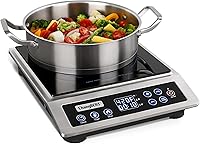
The Duxtop 9600LS uses a 110/120 V, 15 A outlet and offers power settings from 100 to 1,800 W.
Choose this model for everyday single-pan cooking if you want touch controls, 20 power levels, and 20 temperature settings. Its keep-warm button and timer also suit cooks who switch between meal preparation and holding food for serving.
Skip it if you regularly need 2 pans cooking together. Check your smallest cookware, too: Duxtop requires a magnetic base at least 5 inches across, so a tiny saucepan may not work.
Does an induction burner need its own circuit?
A dedicated circuit is necessary when the manual requires one or an electrician determines your setup needs one. It also removes uncertainty about other appliances competing for that circuit’s capacity.
At full input, a high-power portable burner can leave little or no room for another substantial load. Do not treat a breaker that stays on as proof that every connection is suitable.
Do not install a larger breaker to stop trips. The wiring, receptacles, and circuit design must support any change, which needs an electrician’s assessment.
The complete induction cooktop buyer’s guide explains portable and built-in choices. Built-in units can have different supply and installation requirements, so countertop advice does not automatically apply to them.
Can you use an induction burner with a microwave?
Run both together only if their instructions and the circuit capacity allow it. Use the microwave’s electrical input information when assessing load, rather than its advertised cooking output.
If you cannot confirm capacity, avoid simultaneous use until the setup is checked. Include other large loads, such as a toaster or kettle, in that decision.
Are extension cords or power strips suitable?
Connect directly to a suitable wall outlet unless the cooktop manual explicitly permits another arrangement. A power strip adds sockets, not electrical capacity.
Extra connections can loosen or heat up under a heavy load. Do not use an adapter to bypass grounding or make an unsuitable outlet accept the plug.
If an extension cord is permitted, follow the specified current rating, grounding, and length. Arrange the cord so it cannot touch cookware, hang where someone could pull it, or cross a wet area.
Choose the burner’s working position before buying. If its cord cannot reach a suitable outlet from a stable counter, resolve the placement rather than building a chain of extensions.
Which portable cooktop suits your cooking and circuit?
Choose cooking zones and controls after confirming the electrical requirements. A second zone helps with meal timing, while physical buttons or finer setting choices may matter more for a single-pan cook.
The Duxtop above suits routine meals where one cooking zone is enough. The other options address two different needs: cooking separate dishes together and frequent single-zone use.
Nuwave Double Pro: for meals with a main and a side
The Nuwave Double Pro suits two-pan meals because each zone has its own controls. It runs at 120 V with selectable inputs of 900, 1,500, and 1,800 W, and distributes power between the zones.
Choose it when you want to cook a sauce beside a main dish or hold one food while finishing another. Separate controls let you set different temperatures, but shared input power does not give both zones unlimited output.
Skip it if you expect the power of 2 full-output single burners at once. Also measure your counter: its 23.6-inch width needs more room than a single-zone unit, plus the clearances required by its manual.
ChangBERT Enhanced: for frequent single-pan cooking
The ChangBERT Enhanced suits frequent cooks who prefer physical buttons and want a single-zone unit. It operates at 120 V, with power settings from 200 to 1,800 W.
Its 8-inch heating coil is worth considering for cookware with a broader base, though pan construction still affects heat spread. The dual display shows the timer alongside power or temperature, reducing the need to switch views during a long recipe.
ChangBERT describes its circuitry as designed for continuous duty and identifies the unit as NSF certified. These features make it a useful choice for frequent cooking, but commercial credentials do not reduce its electrical requirements.
Skip it if your main need is a second cooking zone or a lower maximum input. Compare single vs double induction cooktops before deciding how much counter space to give up.
How should you set up and care for the burner?
Use a dry, stable surface with the ventilation space required by the manual. Keep air openings clear of towels, packaging, and nearby objects.
Before the first meal:
- Read the electrical label and connection instructions.
- Confirm which other appliances share the circuit.
- Inspect the cord, plug, and outlet for damage.
- Check cookware compatibility and size.
- Position the pan securely and keep its handle clear of traffic.
A magnet sticking firmly to the pan’s base is a useful first compatibility check. A flat base helps the pan sit steadily, while proper sizing keeps it from crowding controls or neighboring cookware.
For fit details, see what size pan fits an induction burner. The portable induction cooktop guide also covers the size and feature choices to make before ordering.
After cooking, follow the shutdown instructions and allow any cooling cycle to finish before disconnecting power. Let the surface cool, then clean it with the method allowed by the manual.
Heat from the pan can leave the glass hot after the burner switches off. Wipe spills once it is safe, keep water out of vents, and avoid dragging rough cookware across the surface.
The guide to using a portable induction cooktop covers day-to-day controls and cookware habits.
What common mistakes cause trouble?
The biggest mistakes are overlooking shared circuit loads and confusing a low heat setting with a lower connection requirement. A burner that spends much of a recipe simmering still needs the supply specified by its manufacturer.
Do not assume a larger cooking surface draws more current than a smaller one. Total input power matters more than the number or size of the marked zones.
Timers and automatic shutoff features also do not replace supervision. Keep an eye on cooking food, especially when heating oil or using high power.
If heating seems uneven, check pan size, base flatness, and placement before blaming the outlet. Electrical trouble and cookware fit call for different fixes.
What should you do if a breaker trips?
Turn off the burner and stop using that setup until the cause is understood. Repeatedly resetting the breaker without addressing the load or fault is not a solution.
If safe, unplug the appliance and note what else was running. Do not handle a hot or damaged plug, and leave a scorched or burnt-smelling outlet unused.
Have an electrician assess repeated trips, unusual outlet warmth, or damage. The induction cooktop noise guide explains cookware sounds, but crackling at an outlet or signs of overheating need separate attention.
How should induction burner amps guide your final choice?
Choose the connection first, then the cooktop that fits your meals. Induction burner amps are a buying limit, while zone count, controls, and cookware fit determine daily usefulness.
Pick the Duxtop for everyday single-pan meals, the ChangBERT for frequent cooking with physical buttons, or the Nuwave for separate dishes sharing one cooktop’s power. If the circuit capacity remains uncertain, get that checked before buying.
Once the electrical setup is settled, compare the best induction burners by the cooking tasks and counter space you actually have.
Frequently asked questions
How many amps does a portable induction burner use?
A 1,800 W portable induction burner at 120 V draws about 15 A by the basic watts divided by volts calculation. Use this as an estimate, then follow the appliance’s electrical label and manual for its connection requirements, including any limits on sharing the circuit.
Can I use an extension cord with an induction burner?
Use a suitable wall outlet directly unless the cooktop manual explicitly allows an extension cord. If it does, follow its requirements for current rating, grounding, and length, and keep the cord away from water and hot surfaces.
A power strip does not add capacity to the circuit.
Can an induction burner share an outlet with a microwave?
An induction burner and microwave should run together only when their instructions and the circuit’s available capacity allow it. Different outlets can share the same circuit, so moving one appliance across the counter may not help.
If you cannot confirm capacity, avoid simultaneous use and ask an electrician.
Does a double induction cooktop need a 20 A outlet?
A double induction cooktop does not automatically need a 20 A outlet. Its total input power, electrical label, and manual determine the connection requirements, rather than the number of cooking zones.
Some models share power between zones, so do not assume each burner draws the full appliance wattage.