How to Use a Portable Induction Cooktop
To use an induction cooktop, center a compatible magnetic pan on the cooking zone, connect it to a suitable outlet, and select a heat setting. Stay nearby, lower the heat as needed, and let the glass cool before cleaning.
On this page (7 sections)
- How do you set up a portable induction cooktop?
- What cookware works on an induction cooktop?
- How do you use an induction cooktop for your first meal?
- How do you prevent scorching and boilovers?
- Which portable burner should you choose?
- What safety and care mistakes should you avoid?
- How should you choose and use an induction cooktop?
To use an induction cooktop, center a compatible magnetic pan on the cooking zone, connect the burner to a suitable outlet, and choose a heat setting. Begin with moderate heat for most pan cooking, watch the food, and adjust as needed.
Induction heats the cookware directly, so your pan matters as much as the controls. A flat magnetic base, suitable pan size, and clear airflow give you a sound starting point.
How do you set up a portable induction cooktop?
Set the burner on a dry, level, heat-resistant counter, leaving the ventilation space required by its manual. Keep it away from the sink, loose towels, and anything that could block its air vents.
Allow room for the pan handle without letting it project over the counter edge. Inspect the glass, cord, and plug before use, and don't connect a damaged unit.
Check electrical requirements before plugging in. All 3 burners below use 120 V power, but you still need to account for other appliances sharing the circuit.
Avoid running another high-draw appliance on that circuit while cooking. Use an extension cord or power strip only if the cooktop manufacturer expressly permits it.
Our guide to induction burner outlet and amp requirements explains the checks to make before choosing a spot.
What cookware works on an induction cooktop?
Choose a flat-bottomed pan with a magnetic base that meets the burner's cookware size rules. Cast iron, enameled iron, and magnetic stainless steel can work; the material name alone isn't enough.
Hold a magnet against the underside, checking the cooking base rather than a handle or sidewall. It should stick firmly, and the pan should sit without rocking.
Measure the flat base, not the width across the rim. A wide frying pan with a small base may fit differently from a straight-sided pot of the same stated size.
The Duxtop 9100MC requires a magnetic cookware base at least 5 in across. Its auto-pan detection shuts the burner off after 60 seconds if no pan or incompatible cookware is detected.
Lift rough-bottomed cookware instead of dragging it, and remove grit from the base before cooking. A large pan extending beyond the heating area can develop cooler outer edges, even if the burner recognizes it.
Read what size pan fits an induction burner for sizing help. For the basics behind pan compatibility, see what an induction cooktop is.
How do you use an induction cooktop for your first meal?
Start with a pot of water or a simple soup, so you can learn the controls while watching a clear change in the food. Center the filled pan, turn on the burner, and select power mode.
Use higher output to bring water toward a boil, then reduce it once bubbles rise steadily. For soup, stir and lower the setting until it maintains the simmer your recipe needs.
Keep ingredients and utensils ready before heating a frying pan. Avoid leaving an empty pan on high power, since induction can heat it quickly enough to damage cookware or scorch oil.
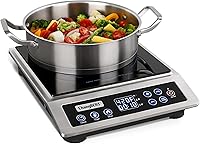
The ChangBERT 8-Inch Commercial model has push-button controls, 9 power levels from 200 to 1,800 W, and 18 temperature settings from 120°F to 460°F. Its countdown timer runs up to 10 hours.
Set a short reminder when learning a recipe, even if the burner has a longer cooking timer. A timer helps track cooking time; it doesn't replace watching the pan.
Should you use induction cooktop power or temperature mode?
Use power mode for output control and temperature mode when a target heat setting suits the task. Power mode is a useful starting point for boiling, steaming, and adjusting a simmer.
Temperature mode doesn't confirm the temperature throughout the pan or inside your food. Pan construction, food quantity, and stirring still affect the result.
Make one adjustment at a time and watch its effect before changing again. If food catches on the bottom, reduce the setting and stir rather than repeatedly switching between modes.
What if the cooktop doesn't start?
Check pan compatibility, base size, centering, and the selected controls before assuming the burner is faulty. Turn it off before correcting the setup.
Read any error code in the manual. Don't repeatedly restart a unit with a blocked vent, damaged cord, or unexplained fault.
How do you prevent scorching and boilovers?
Lower the heat before food reaches the point of burning or boiling over. Induction responds quickly to control changes, but a heavy pan and its contents retain heat.
Use high output for suitable tasks such as heating water, then step down. Stir thick sauces across the bottom and corners, and leave headroom in pots for bubbling or foaming.
For frying, start below maximum and increase only as needed. Smoking oil is a signal to reduce heat; if it catches fire, switch off the burner if safe and never add water.
The ChangBERT Enhanced has dedicated BOIL and KEEP WARM buttons plus one-click access to maximum output. Its dual display shows the timer alongside power or temperature, reducing the need to switch views.
Use those shortcuts for the task they match, rather than as default settings for every pan. KEEP WARM doesn't establish a safe food temperature, so check food with a thermometer when holding it for serving.
For help matching output to your meals, read how many watts an induction burner needs.
Which portable burner should you choose?
Choose by your cookware, usual meals, and control preferences before comparing extra features. These are single-burner units, so plan how you'll cook meals that need several pans.
Measure the available counter space with clearance included. Both ChangBERT models measure 15 in deep by 12.2 in wide; the Duxtop measures 12.7 in deep by 16.3 in wide.
Choose the Duxtop for everyday heat adjustments
The Duxtop suits home cooks who want more selectable heat steps. It provides 20 power levels from 100 to 1,800 W and 20 temperature settings from 100°F to 460°F.
Choose it for routine boiling and pan cooking where you'll adjust settings yourself. Skip it if a long timer or dedicated task buttons are central to your cooking routine; its timer tops out at 170 minutes.
Choose the ChangBERT 8-Inch for long cooking sessions
The standard ChangBERT suits frequent batch cooking with a long countdown timer and stainless steel housing. ChangBERT describes its circuitry as built for continuous-duty use and identifies the unit as NSF certified.
Its 8 in heating coil makes cookware base size worth considering when choosing pans. Skip it if your main priority is the finer selection of low power settings offered by the Duxtop.
Choose the ChangBERT Enhanced for task shortcuts
The Enhanced suits cooks who regularly switch between boiling and holding food. Its dedicated controls and 12-hour timer make those routines easier to manage.
Choose it when the shortcuts and simultaneous timer display solve a daily need. Skip it if you mostly cook short, simple meals and are comfortable adjusting output manually.
For a broader comparison of features and kitchen fit, read how to choose a portable induction cooktop.
What safety and care mistakes should you avoid?
Treat the glass as potentially hot after cooking, because the pan transfers heat back to it. Removing the pan or switching off the burner doesn't make the surface safe to touch.
Keep metal utensils, loose lids, and small metal objects away from the active zone. Turn handles inward, keep children clear, and stay nearby while food cooks.
Let the unit cool and follow its unplugging instructions before cleaning. Wipe with a soft damp cloth, dry it, and keep water out of vents and controls.
Don't immerse the burner, use abrasive pads, or scrape it with an unsuitable tool. Check the manual for approved cleaners and instructions for stuck-on food.
Keep cooling vents clear during use and any fan run-on after cooking. For unfamiliar sounds, read why an induction cooktop makes noise, and stop using the unit if noise accompanies an error or unusual smell.
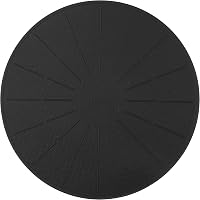
Only add a mat beneath the unit or between the pan and glass if the manufacturer permits that placement. Read whether you need an induction cooktop mat or protector before buying one.
Store the burner dry and fully cool, with its cord loosely arranged. Protect the glass from knocks rather than stacking cookware on top.
How should you choose and use an induction cooktop?
Pick the Duxtop for more heat settings, the standard ChangBERT for long cooking sessions, or the Enhanced for frequent boiling and holding tasks. Match your existing pans and counter space before deciding which controls you prefer.
Once you know how to use an induction cooktop, build a simple routine: check the pan, start conservatively, adjust by watching the food, and clean after cooling.
Use the complete induction cooktop guide to compare the wider category. If you're weighing an extra burner against your current stove, read whether portable induction cooktops are worth it.
Frequently asked questions
How do you know if a pan works on an induction cooktop?
Start with a magnet: it should stick firmly to the pan's base. Then check the cooktop's minimum cookware diameter and placement rules, since a magnetic pan can still be too small for detection.
A flat base helps the pan sit securely, and bare aluminum, copper, or glass cookware generally needs an induction-compatible base.
Can you use an induction cooktop with any outlet?
No. Match the cooktop's voltage, current, and plug to the outlet and circuit requirements in its manual.
These 3 models use 120 V power, but other appliances can share the same circuit and add to its load. Our induction burner amps guide explains what to check before connecting one.
Should you use power or temperature mode?
Use power mode for boiling, heating soup, and adjusting a simmer by eye. Temperature mode gives you a target setting for tasks such as pan cooking, but it doesn't measure the center of your food.
Start conservatively, watch the pan, and use a food thermometer when checking doneness or holding temperature.
How do you clean a portable induction cooktop?
Switch it off, let the glass cool, and unplug it as directed in the manual. Wipe with a soft damp cloth and an approved cleaner, then dry the surface.
Keep liquid out of vents and controls, avoid abrasive pads, and never immerse the burner or wrap its cord around hot parts.