What Size Pan Fits an Induction Burner?
For induction burner size vs pan size, choose a flat magnetic base within the cooktop's approved cookware range and close to its coil diameter. Measure the pan's bottom, not its rim, because the glass surface can be wider than the heating coil.
On this page (7 sections)
- How do induction burner size and pan size work together?
- How do you measure a pan's base before buying?
- What happens if the pan is smaller than the burner?
- Can a pan be larger than the induction burner?
- How can you confirm compatibility and set up the burner?
- Which pan-fit mistakes cause uneven cooking or damage?
- Which burner and pan combination should you choose?
For induction burner size vs pan size, choose a flat magnetic base within the cooktop's approved cookware range and close to its coil diameter. Measure the bottom, not the rim, because a wide skillet can have a much smaller cooking base.
A smaller pan may fail to register, while a much wider base can leave food cooking faster in the center than around the edges. Start with the pans you use most, then choose a burner that fits them.
How do induction burner size and pan size work together?
The coil heats the compatible magnetic base, and the pan spreads that heat through its metal. The glass surface, printed circle, and coil can all have different diameters.
Keep these measurements separate:
- Pan rim: the top opening, often used for the advertised pan size.
- Flat base: the bottom area that rests on the glass.
- Magnetic disk: the induction-compatible section, which may cover only part of the bottom.
- Heating coil: the component beneath the glass that creates the magnetic field.
A close base-to-coil match is a useful starting point, but the manual's minimum and maximum cookware dimensions take priority. Coil diameter alone doesn't establish which pans a burner accepts.
For the basics, see what an induction cooktop is. Our induction cooktop buyer's guide explains how portable and built-in options differ.
How do you measure a pan's base before buying?
Measure straight across the flat bottom, excluding any sloped sides. Let the pan cool, turn it over on a protected surface, and use a ruler or tape measure.
For example, a skillet sold as 10 inches might have a flat base closer to 7 inches. That bottom measurement is more useful than the rim size when comparing cookware with a burner.
If there's a separate metal disk underneath, measure it too. A wide pan with a small magnetic disk doesn't gain a wider induction heating area just because its outer edges extend farther.
Check that the bottom sits level without rocking. Press a magnet against several points across the base to see whether magnetic material covers the bottom or is limited to a smaller section.
How close should induction pan size be to burner size?
Choose a similar base and coil diameter within the approved range, rather than following a fixed allowance. There isn't one universal rule that every pan may extend a certain number of inches beyond every coil.
For a cookware set, measure your smallest saucepan and widest everyday skillet first. These two pans reveal whether one burner can cover your usual cooking needs.
Who should choose the ChangBERT for wider cookware?
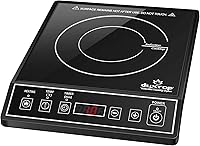
The ChangBERT suits frequent cooking with pans matched to a larger coil, especially when you want physical buttons. It has an 8-inch heating coil, 1800 watts of power, and a countdown timer of up to 10 hours.
Its stainless steel housing and continuous-duty circuitry make it worth considering for repeated cooking sessions. ChangBERT identifies it as NSF certified, which also matters to buyers choosing equipment for commercial food preparation.
Skip it if your main need is a burner for a tiny saucepan until you've confirmed that pan meets its minimum size. If your meals mostly need gentle sauce work, compare its temperature controls with the finer steps on the Nuwave Gold.
What happens if the pan is smaller than the burner?
A pan below the minimum supported base size may not register or may stop heating. A smaller pan can still work when it falls within the approved range and sits centered over the coil.
Don't judge fit by how much of the printed circle remains visible. Pan detection depends on the compatible base and the cooktop's design, rather than full coverage of the glass marking.
If a small pot won't heat, check its magnetic base, position, and size before raising the power. Extra power won't solve a cookware detection problem.
Who should choose the Nuwave Gold?
The Nuwave Gold suits cooks who want fine temperature adjustments alongside a larger coil. Its 8-inch coil sits beneath a 12-inch heat-resistant cooking surface, clearly showing why glass diameter and heating diameter aren't interchangeable.
Temperature settings run from 100°F to 575°F in 5°F steps, and you can change temperature or cooking time without restarting. Those controls suit cooks who move between warming sauces and higher-heat cooking.
Skip it if you need the slimmest unit here, since its body stands 4.5 inches high. Also confirm compatibility before choosing it mainly for small pots; fine controls don't remove minimum pan-size limits.
Can a pan be larger than the induction burner?
A pan can extend beyond the coil if the cooktop allows its size, but the outer base relies more on heat spreading through the metal. That difference matters most when food needs even contact heat across a broad surface.
A wide pot of soup is more forgiving because you can stir the contents. Pancakes, fish fillets, and several cutlets can reveal cooler edges because the food stays in separate spots.
A thick, heat-spreading base can help, but it doesn't turn a small coil into a large one. Avoid solving a cool outer edge by sharply increasing power, which can overheat the center.
Check physical fit too. Cookware must remain stable, leave controls accessible, and meet the manual's clearance and overhang rules.
Who should choose the Nuwave Precision 10.25-Inch model?
The Nuwave Precision suits cooks using smaller everyday pans who also want adjustable power limits. It combines a 6.5-inch coil with a 10.25-inch ceramic glass surface.
Its selectable power settings are 600, 900, and 1400 watts, with temperatures from 100°F to 500°F in 5°F steps. A frying pan is included, though its dimensions aren't specified here.
Skip this model if your main task is browning food across a broad skillet base. For that job, compare larger coils first instead of choosing by the glass surface measurement or included cookware.
How can you confirm compatibility and set up the burner?
Start with a magnetic, flat base that meets the size limits, then place the burner on a stable, heat-resistant counter. Leave the ventilation clear and follow the manual's clearance instructions.
A magnet that sticks firmly is a useful compatibility check, but it doesn't prove the pan fits the burner. Stainless steel varies, and an induction symbol doesn't override the cooktop's cookware limits.
Center the pan before switching on, keep its base clean and dry, and position the handle where it won't be bumped. Start at moderate power and avoid heating an empty pan at maximum power.
For a full setup sequence, see how to use a portable induction cooktop. Check our guide to induction burner outlet requirements before sharing a circuit with other high-power appliances.
Who should choose the Nuwave Flex?
The Nuwave Flex suits cooks who need a low-profile burner for smaller compatible cookware. Its body measures 10 inches deep, 12 inches wide, and 2 inches high.
You can adjust its cooking temperature and time without restarting. Its slim body is useful when cabinet storage height matters.
Skip it for broad skillets that need heat spread across a large base. Its coil is the same size as the Nuwave Precision model above, so choose between them for storage and controls rather than expecting wider heating.
Which pan-fit mistakes cause uneven cooking or damage?
The biggest mistakes are using rim diameter as base diameter and assuming higher power will fix a poor size match. Both can leave you with cookware that fits visually but cooks poorly.
Avoid these habits:
- Moving a small pan off-center: center its magnetic base over the coil.
- Using maximum power to warm a wide skillet: allow gradual preheating within the cookware instructions.
- Expecting a temperature setting to describe every part of the pan: food load and heat spread still affect cooking.
- Sliding heavy cookware across the glass: lift it to reduce scratching from trapped grit.
- Adding an adapter plate to bridge a size gap: use one only if the cooktop manufacturer approves it.
More wattage changes available power, not coil width. Our guide to induction burner wattage explains that separate buying choice.
Let the surface cool before cleaning because the hot pan can leave residual heat in the glass. Wipe spills with a soft cloth and an approved cleaner, and keep the pan bottom free of stuck-on debris.
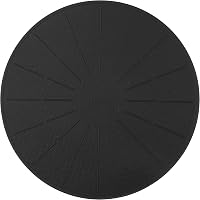
For protection options, read about induction cooktop mats and protectors. Confirm that the cooktop permits a mat before putting one between the pan and glass.
Which burner and pan combination should you choose?
For induction burner size vs pan size, choose around your hardest everyday cooking task. A wide skillet used for browning needs a closer coil match than a pot used mainly for stirred liquids.
Pick ChangBERT for frequent use with suitable wider-base cookware and physical buttons. Choose Nuwave Gold when fine temperature steps matter more to your cooking routine.
Choose Nuwave Precision for smaller compatible pans and selectable power settings. Pick Nuwave Flex when a low-profile body makes storage easier.
Before ordering, write down your pans' base measurements and compare them with the manual's approved range. Then use our guide to choosing a portable induction cooktop to weigh counter space, controls, and daily cooking needs.
Frequently asked questions
Should a pan be the same size as an induction burner?
A pan's flat magnetic base should be close to the coil diameter, but an exact match isn't required. The cooktop's approved cookware range takes priority.
Measure the bottom rather than the rim, and remember that the visible glass ring may be wider than the coil beneath it.
Can a pan be too small for an induction cooktop?
Yes, a pan below the cooktop's minimum base diameter may fail to register or stop heating. Centering helps only when the cookware is otherwise compatible and large enough.
Check the manual's minimum size before choosing a small saucepan, butter warmer, or coffee pot for an induction burner.
Can a pan be larger than the induction coil?
Yes, if the pan stays within the cooktop's approved cookware limits. Heat must spread through the metal beyond the coil, so a wide skillet can have cooler edges.
This matters more for pancakes or searing than for a pot of soup that you can stir.
How do I measure a pan for induction?
Measure straight across the flat bottom that rests on the cooktop, leaving out sloped sides and the top rim. If the pan has a separate magnetic disk underneath, note that disk's diameter too.
Compare those measurements with the cooktop's instructions and check that the bottom sits flat.