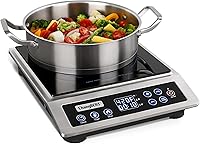
Induction Cooktops: The Complete Buyer's Guide
Choose an induction cooktop by matching its format to your daily meals, cookware and power supply. Pick a single portable burner for one-pan cooking, a double burner for two countertop zones, or a built-in model for a permanent kitchen setup.
On this page (11 sections)
- What is an induction cooktop, and what makes it different?
- Which induction cooktop format fits your kitchen?
- How many cooking zones do you need?
- How much power does an induction cooktop need?
- Which pans work on an induction cooktop?
- What should you compare in controls and safety features?
- Which induction cooktop examples match each setup?
- How do you set up an induction cooktop before the first meal?
- How should you care for an induction cooktop?
- Which buying mistakes are easiest to avoid?
- How do you choose the right induction cooktop?
Choose an induction cooktop that fits your daily meals, magnetic cookware and available power supply. A single portable burner suits one-pan cooking, a double burner adds another countertop zone, and a built-in model belongs in a kitchen planned for permanent installation.
Count the pans you normally use together before comparing features. Then check their bases, your available workspace and the electrical connection, since those details can rule out an otherwise appealing cooktop.
What is an induction cooktop, and what makes it different?
An induction cooktop uses an electromagnetic field to heat compatible cookware, so the pan itself becomes the heat source. Gas heats through a flame, while conventional electric cooktops transfer heat from a hot element to the pan.
That difference makes cookware part of the heating system. A pan needs a magnetic base of a suitable size, and the cooktop must detect it before cooking can begin.
Induction responds quickly to setting changes, which helps when a sauce starts bubbling too hard or a skillet needs less heat. A thick, heavy pan still holds heat after you reduce the setting, so cookware affects that response.
The glass can become hot through contact with the pan. Removing the cookware stops the cooking process, but it does not mean the surface is ready to touch or wipe.
For a plain-language explanation of the process, see what an induction cooktop is. Our guide to portable induction cooktop pros and cons explains the practical reasons to choose or skip a countertop unit.
Which induction cooktop format fits your kitchen?
Choose a single portable burner for flexible placement, a double burner for two countertop tasks, or a built-in cooktop for a permanent cooking area. Each format solves a different space and installation problem.
| Format | Choose it for | Main limit to consider |
|---|---|---|
| Single portable burner | One-pan meals, an extra burner or cooking equipment you can store | Only one pan can cook at a time |
| Double countertop burner | A main dish and side without cutting the counter | Two zones can share a limited total power supply |
| Built-in cooktop | Several pans in a fitted kitchen | Cutout, cabinet and electrical requirements must match |
A single burner works well for a skillet dinner, soup or boiling task. It also makes sense beside an existing stove when you need an extra cooking spot occasionally.
Skip a single burner as your only cooktop if dinner usually means several pans finishing together. You can cook in stages, but holding one dish while making another adds work and can affect the meal.
A double countertop model keeps two pans active without becoming a permanent fixture. It takes more usable counter space, including room for handles, controls and nearby food preparation.
A built-in model frees you from setting out a separate appliance each time. It suits a remodel or planned replacement, provided the counter opening and wiring match the specific model.
Renters should check appliance rules before choosing any format. A portable unit can be stored between meals, while a built-in installation needs permission to alter the kitchen.
The portable induction cooktop guide covers countertop selection in more detail. For a fitted kitchen, start with how to choose a built-in induction cooktop.
How many cooking zones do you need?
Choose the number of zones by counting pans that need heat at the same time, rather than dishes on the menu. A meal with several parts may still work on one burner if some parts need no cooking.
Think through 3 meals you make often. Note which pans need active heat, which dishes can wait and which foods lose their texture if held too long.
A one-pot stew with bread needs one zone. Pasta with a separately cooked sauce usually benefits from two, while a meal with a main dish, vegetables and a pan sauce can use more.
Also count the cooking tools you already have. An oven or rice cooker may handle a side dish, allowing a single induction burner to cover the rest of dinner.
For two-zone models, check pan spacing as well as zone count. A wide skillet and a large pot can crowd each other even when both bases fit their marked areas.
Use actual cookware when planning the layout. Measure the widest part of each pan and allow handles to sit where you can reach them without crossing another hot pan.
A four-zone cooktop gives more options, but four large pans may not fit together comfortably. Choose a layout that suits your usual combination of cookware.
For a closer look at the countertop choice, read single vs double induction cooktops.
How much power does an induction cooktop need?
Match the appliance's electrical requirements to the circuit, then compare how its available power serves your cooking. A plug that fits the outlet does not establish that the circuit can support every connected appliance.
Maximum wattage describes the upper end of power use. It does not tell you how gently a burner can hold a simmer, how widely it heats a pan or how two zones divide power.
Choosing induction cooktop power for your meals
Prioritize stronger heating for large boiling tasks, then look at lower settings if you often cook sauces, porridge or small portions. A wide range of settings gives you more choices, though pan size and food quantity still matter.
On a double burner, independent controls do not mean both zones can run at their individual maximums together. Check the total appliance power and the instructions for sharing it between zones.
For example, you might boil water first, then reduce that zone while using more power for a skillet. Planning the order of cooking can make a shared supply easier to use.
Checking the connection before you buy
For a portable unit, identify other appliances using the same circuit. A kettle, toaster oven or microwave can add substantial demand even when plugged into a different outlet.
Follow the manufacturer's connection instructions, including any limits on extension cords or adapters. If a breaker trips during normal use, have the load and circuit checked rather than repeatedly resetting it.
Built-in models need a separate installation check. Have a qualified electrician confirm the required supply, wiring and protective devices before the appliance arrives.
Our guides explain induction burner wattage and whether you can plug an induction burner into any outlet.
Which pans work on an induction cooktop?
Use flat cookware with a magnetic base that suits the zone's detection requirements. Check your current pans before ordering a cooktop so you know which ones you can keep.
Hold a magnet against the bottom of each pan. A firm grip is a useful first check, but cookware marked for induction and sized for the cooktop is the better buying guide.
Cast iron and many magnetic stainless-steel pans work. Plain aluminum, copper and glass generally need a suitable magnetic base layer to work on induction.
Measure the flat base rather than the rim. A frying pan's advertised size often describes its top, while the base touching the cooktop is smaller.
Match the heated area to the food
Choose a pan whose base suits the heating zone and the portion you cook. A large pan over a much smaller heating area can develop a hotter center, especially during quick cooking.
The outer ring printed on the glass does not necessarily show the exact coil diameter. Pan material and thickness help spread heat, but a large surface alone cannot guarantee even browning.
For eggs, pancakes or other foods spread across a skillet, base shape matters more than it does for a pot of water you can stir. Avoid choosing solely by whether the pan triggers detection.
Check stability and everyday handling
A pan should sit flat without rocking. Keep its base clean, since grit trapped underneath can scratch the cooking surface when the pan moves.
Heavy cookware can work well, but consider how easily you can lift it when full. Handles should leave room to stir and serve without extending into a walkway.
Read our guide to induction burner size and pan size before replacing cookware or choosing a burner around a favorite pan.
What should you compare in controls and safety features?
Choose controls that make routine heat changes clear and easy, then compare timers, locks and shutoff functions. The most useful feature is one that solves a task you perform often.
Touch controls give a flat surface to wipe, while physical buttons provide a tactile response. Consider how you change settings while stirring and whether the display is readable from your usual position.
Power mode sets the heating level. Temperature mode aims for a selected temperature, but the displayed number should not replace a food thermometer or your judgment about how the food is cooking.
A small batch of sauce and a large pot of stew behave differently at the same setting. Start with a moderate level and adjust based on bubbling, browning and evaporation.
For timers, check what happens when time runs out. A reminder alarm and a timer that switches off a cooking zone serve different purposes.
Keep-warm functions are useful for short serving delays, but they are not a substitute for proper food storage. Follow food-handling guidance when holding cooked meals.
A control lock helps prevent settings from changing accidentally. It does not stop someone from touching a hot pan, pulling a handle or reaching hot food.
Pan detection and overheating protection add safeguards, but stay nearby while cooking. Choose a clear work area where children cannot reach handles or pull the appliance cord.
Which induction cooktop examples match each setup?
The Duxtop 9600LS fits flexible one-pan cooking, ChangBERT suits extended use with physical controls, Duxtop 9620LS adds a second countertop zone, and Empava suits a permanent kitchen installation. Choose between them by the work you need done.
Duxtop 9600LS Portable Induction Cooktop
Choose the Duxtop 9600LS if you want a single countertop burner for everyday meals or an extra cooking task beside your main stove. Its separate power and temperature modes suit buyers who want more control than a few broad heat settings.
It has 20 power levels from 100 to 1,800 W and 20 temperature settings from 100°F to 460°F. Its touch panel includes a child safety lock and a countdown timer of up to 10 hours.
At 6.2 lb, it is a practical choice for someone who plans to put the burner away after meals. It uses a 110/120 V, 15 amp outlet.
Use magnetic-bottom cookware with a base at least 5 in across. Auto-pan detection switches the unit off after 60 seconds when no pan or incompatible cookware is detected.
Buy it for a flexible single cooking station. It makes sense for a small household that cooks in one pan, or for someone who wants to boil, simmer or keep a dish warm away from the main stove.
Skip it if two pans need active heat most evenings. Buyers who prefer a physical response from the controls should compare the ChangBERT instead.
ChangBERT 8-Inch Commercial Induction Cooktop
Choose the ChangBERT if you want a single burner with tactile push-button controls and an 8 in heating coil. Its control style is a clear reason to choose it over the touch-panel Duxtop.
It offers 9 power levels from 200 to 1,800 W and 18 temperature settings from 120°F to 460°F. ChangBERT designs its continuous-duty circuitry for extended cooking and backs home use with a 2-year limited warranty.
The cooktop has stainless steel housing and weighs 6.1 lb. Safety features include pan detection, overheating protection, a hot-surface indicator and automatic shutdown.
ChangBERT identifies the unit as NSF certified and ETL approved. It uses a 120 V supply.
Buy it for frequent single-pan cooking and physical controls. The coil size also makes it worth considering when matching a burner to a suitable skillet, though cookware still affects heat distribution.
Skip it if you need two cooking zones or want the Duxtop's lower selectable temperature setting. Commercial features do not add another cooking position, so choose the format before choosing the housing.
Duxtop 9620LS Double Induction Cooktop
Choose the Duxtop 9620LS if you need a main dish and a side cooking together without fitting a cooktop into the counter. Its two zones have separate settings through the LCD touch control panel.
The appliance has a total rating of 1,800 W, with individual burner maximums of 1,800 W on the left and 1,000 W on the right. Do not add those burner figures together as available simultaneous output.
It offers 20 preset levels per mode and a countdown timer of up to 10 hours. It uses a 120 V, 15 amp supply and weighs 12.8 lb.
Both zones require magnetic-bottom cookware with a base at least 5 in across. Before choosing it, check whether your usual pot and skillet can sit together with their handles clear of the controls.
Buy it for two tasks that need different heat levels, such as a simmering sauce beside a more active cooking task. Expect to plan around the shared power supply when both pans need strong heat.
Skip it if you need two high-powered burners running flat out together. A single unit is also easier to justify if you rarely use the second zone and need to store the appliance after every meal.
Empava Ease 30-Inch Built-In Induction Cooktop
Choose the Empava Ease for a permanent four-zone kitchen setup where the counter and electrical supply can be prepared for a hardwired appliance. It serves a different role from the portable options.
Its digital touch controls include boost mode, and its safety features include overheating prevention and automatic shutoff. The frameless black glass surface measures 30 in wide by 21 in deep by 2.17 in high.
The cooktop weighs 28.7 lb. Those overall measurements describe the appliance, so use the installation instructions for the required counter opening and clearances.
Buy it for a remodel or replacement planned around several cooking zones. The independent zone timers can help manage dishes with different cooking times.
Skip it for a rental where you cannot alter the counter, or when you only need a movable extra burner. Have an installer confirm the fit and electrical work before ordering, especially when replacing a different cooktop.
How do you set up an induction cooktop before the first meal?
Set up a portable unit on a stable, heat-resistant surface with clear ventilation, or have a built-in model installed to its instructions. Read the manual before connecting power so placement and cookware rules are clear.
For a portable burner, leave the required clearance around air openings. Keep towels, paper, curtains and other loose items away from the appliance and its fan intake.
Place the cord where it cannot be pulled, pinched or touched by hot cookware. Keep the unit away from splashing water and position it so pan handles remain over the work area.
Clean and dry the cooking surface and pan base. Center a suitable pan before switching on the heat, then begin with a simple task such as warming water.
Use that first session to learn zone selection, heat adjustment, the timer and the lock. Put ingredients within reach before cooking foods that change quickly, since induction can heat a pan faster than you expect.
Avoid using maximum power as the default for an empty pan. Follow the cookware maker's preheating instructions, especially for coated pans.
For step-by-step operation, read how to use a portable induction cooktop.
How should you care for an induction cooktop?
Let the surface cool, then remove spills with a soft cloth and an approved cleaner. Clean pan bottoms and clear ventilation openings help protect the appliance during everyday use.
Follow the cooktop's instructions for dried food and stubborn marks. Avoid rough pads, harsh cleaners or scraping tools unless the manufacturer permits them.
Lift cookware rather than dragging it across the glass. Check the base of cast iron and other heavy pans for rough spots or stuck food before setting them down.
Do not immerse a portable unit or let water enter its controls and vents. Store it dry, with the cord arranged so it does not press hard against the plug or appliance.
Avoid treating a built-in cooktop as extra storage. Dropping a heavy jar or stacking cookware on the glass creates a risk unrelated to cooking.
Some layered-metal pans make high-pitched sounds during use. A fan can also be part of normal operation, so identify the source before assuming the appliance has a fault.
If a new sound comes with an error, poor heating or another change in operation, stop and follow the manual's troubleshooting steps. See why an induction cooktop may make noise for common causes.
Use a mat only if the cooktop manufacturer allows that type of accessory. Read about induction cooktop mats and protectors before placing anything between the pan and glass.
Which buying mistakes are easiest to avoid?
Avoid choosing by maximum wattage, zone count or advertised width alone. The best fit depends on how those features work with your pans, meals and kitchen.
- Measuring the pan rim instead of its base: Check the flat magnetic area that meets the glass.
- Assuming any magnetic pan will fit: A small base may fail detection, while a large skillet may extend well beyond the heated area.
- Counting two zones as twice the power: Check the appliance's total output and power-sharing rules.
- Measuring only the appliance footprint: Allow room for ventilation, handles, controls and nearby food preparation.
- Buying a built-in model before checking the opening: Required cutout dimensions can differ from the outer glass dimensions.
- Treating a temperature setting as food temperature: Watch the food and use an appropriate thermometer when needed.
- Overlooking cookware replacement: Include any needed pans when comparing the overall cost of switching.
Also consider the work of setting out and storing a portable burner. If that routine would discourage daily use, plan a suitable permanent countertop position or choose a fitted model.
How do you choose the right induction cooktop?
Pick the induction cooktop that handles your normal meal with the fewest compromises. Confirm cookware, space and power first, then choose the controls and cooking features you will use.
Choose the Duxtop 9600LS for a flexible one-pan station with a broad range of settings. Choose the ChangBERT if physical buttons and frequent extended cooking matter more to you.
Choose the Duxtop 9620LS when a second countertop zone makes dinner easier and you can work within shared power. Choose the Empava Ease when you need a permanent four-zone appliance and have confirmed the installation.
Before ordering, measure your usual pans, mark out the available work area and verify the electrical requirements. For a built-in replacement, have the cutout and installation plan checked before removing the old appliance.
If you're still deciding between cooking technologies, use our induction vs electric cooktops comparison. Once the format is settled, compare models in our best induction cooktops guide.
Frequently asked questions
What cookware works on an induction cooktop?
Use cookware with a flat, magnetic base that fits the cooking zone. Cast iron and magnetic stainless steel are common choices, but check each pan with a magnet rather than trusting its material name.
Measure the base too, because a magnetic pan can still be too small for detection.
Can an induction cooktop use a regular outlet?
Many portable induction cooktops use a standard North American household outlet, provided the voltage, current and circuit capacity match the appliance. Other appliances on that circuit also draw power.
Built-in models may require hardwiring, so confirm the installation requirements and have a qualified electrician assess the supply before buying.
Is a portable induction cooktop enough for everyday cooking?
A single portable induction cooktop is enough when your usual meals need only one active pan or you can cook dishes in stages. It also works as an extra burner alongside another appliance.
Choose more zones if keeping a main dish and sides cooking together is part of your routine.
What size induction cooktop should I choose?
Choose a cooktop that fits your actual pans and work area, then check its installation requirements. Measure pan bases and handle clearance for countertop models.
For a built-in cooktop, compare the required cutout, cabinet clearance and electrical supply rather than relying on the advertised width alone.
Do induction cooktops need special care?
Let the cooktop cool, then clean it with a soft cloth and products approved for its surface. Keep pan bottoms clean and lift heavy cookware instead of sliding it.
Portable units also need clear ventilation openings, and their electrical parts should stay dry during cleaning and storage.