7 Best Induction Cooktops (October 2026)
The best induction cooktops include the Duxtop 9600LS Portable Induction Cooktop for everyday cooking, the ChangBERT 8-Inch Commercial Induction Cooktop for frequent batch cooking, and the ChangBERT Enhanced Portable Induction Cooktop for busy meal prep.
On this page (8 sections)
- How we chose the best induction cooktops
- Best induction cooktop features at a glance
- Which induction cooktop fits your cooking style?
- How do you choose an induction cooktop?
- How should you set up a portable induction cooktop?
- Which induction cooking mistakes should you avoid?
- How do you clean and care for an induction cooktop?
- Which induction cooktop should you choose?
The Duxtop 9600LS Portable Induction Cooktop is the best induction cooktop for most people who want an everyday countertop burner. Its broad controls suit varied meals, while ChangBERT favors frequent cooking and Nuwave offers small temperature adjustments.
All 7 picks here are portable countertop models, not built-in replacements for a full kitchen cooktop. Choose around your regular pans, available counter space and the meals you want to cook.
Start with our induction cooktop buyer's guide for the wider category. If you're replacing an installed cooking surface, our built-in induction cooktop guide covers that different buying task.
Our picks at a glance
-
1
 Best for everyday cooking
Duxtop 9600LS Portable Induction Cooktop
9.1/10 our score
See it on Amazon -
2
 Best for frequent batch cooking
ChangBERT 8-Inch Commercial Induction Cooktop
8.9/10 our score
See it on Amazon -
3
 Best for busy meal prep
ChangBERT Enhanced Portable Induction Cooktop
8.6/10 our score
See it on Amazon
- 4
 Check it
Nuwave Gold Precision Induction Cooktop
Best for delicate sauce making - 5
 Check it
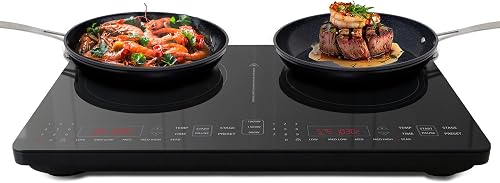
Duxtop 9620LS Double Induction Cooktop
Best for mains and sides - 6
 Check it
Nuwave Flex Precision Induction Cooktop
Best for small kitchens - 7
 Check it
Nuwave Double Pro Induction Cooktop
Best for varied cooking tasks
How we chose the best induction cooktops
We compared heat controls, pan fit, electrical requirements and cooking zones to find useful matches for different kitchens. The order favors everyday versatility, with other picks serving specific needs such as batch cooking or two-pan meals.
A longer timer or higher temperature ceiling only helps if you use it. We gave more weight to features that affect regular cooking, including accessible controls, usable counter space and the ability to manage separate dishes.
The strongest choice for one household may be awkward in another. A compact burner suits someone who stores it after breakfast, while a double model earns its space when dinner regularly needs two pans.
Best induction cooktop features at a glance
Compare zone count and control style first, then check power and temperature ranges. Those differences tell you more about daily fit than a long list of extra functions.
| Product | Best for | Power | Temperature settings | Heating zones | Our score |
|---|---|---|---|---|---|
| Duxtop 9600LS Portable Induction Cooktop | everyday cooking | 100 to 1800 W | 100°F to 460°F | 1 | 9.1 |
| ChangBERT 8-Inch Commercial Induction Cooktop | frequent batch cooking | 200 to 1800 W | 120°F to 460°F | 1 | 8.9 |
| ChangBERT Enhanced Portable Induction Cooktop | busy meal prep | 200 to 1800 W | 120°F to 460°F | 1 | 8.6 |
| Nuwave Gold Precision Induction Cooktop | delicate sauce making | 1500 W | 100°F to 575°F in 5°F steps | 1 | 8.4 |
| Duxtop 9620LS Double Induction Cooktop | mains and sides | 100°F to 460°F | 2 | 8.2 | |
| Nuwave Flex Precision Induction Cooktop | small kitchens | 100°F to 500°F in 5°F steps | 1 | 8.1 | |
| Nuwave Double Pro Induction Cooktop | varied cooking tasks | 900, 1500 and 1800 W settings | 50°F to 575°F in 5°F steps | 2 | 7.8 |
Electrical fit comes before convenience features. Our guide to plugging an induction burner into an outlet explains what to check about the outlet, circuit and other appliances sharing that supply.
Which induction cooktop fits your cooking style?
Choose the Duxtop 9600LS for varied everyday meals, then move to another pick when you have a specific need it doesn't meet. The sections below explain who benefits from each model and who should skip it.
Duxtop 9600LS Portable Induction Cooktop
- 20 power levels from 100 to 1800 W
- 20 temperature settings from 100°F to 460°F
- Timer up to 10 hours
- Child safety lock
Broad power and temperature controls suit a mix of boiling, simmering and pan cooking. Fast boil and keep warm buttons provide shortcuts for common tasks.
Pros
- Broad choice of power and temperature settings
- Fast boil and keep warm shortcuts
- Lock prevents accidental setting changes
Cons
- Needs a magnetic pan base at least 5 in wide
- Only one pan can cook at a time
The Duxtop 9600LS suits someone who wants one burner for several jobs: boiling pasta, cooking a skillet meal or heating a saucepan. Its 20 power levels and 20 temperature settings give you more preset choices than either ChangBERT here.
The fast boil button saves control presses when starting a pot of water. Keep warm runs at 140°F for 1 to 30 minutes, making it a short holding function rather than a reason to leave food sitting indefinitely.
Its touch controls include a lock that prevents accidental setting changes. That is useful around a busy prep area, though it doesn't make hot cookware safe to touch.
Buy it if you want a flexible extra burner or cook most meals in one pan. Skip it for regular two-pan dinners, or choose the Nuwave Gold if small temperature steps matter more than a broad selection of power presets.
ChangBERT 8-Inch Commercial Induction Cooktop
- Continuous-duty circuitry
- 8 in heating coil
- Tactile push buttons
- 10-hour timer
Continuous-duty circuitry suits repeated cooking sessions and sustained heating. Physical buttons provide a clear press response when changing settings.
Pros
- Circuitry designed for ongoing use
- Stainless steel housing
- ChangBERT identifies it as NSF certified
Cons
- Fewer heat settings than the Duxtop 9600LS
- Needs more counter depth than the Nuwave Flex
The standard ChangBERT suits cooks who make repeated batches or keep a burner working through a longer prep session. Its continuous-duty circuitry is designed for ongoing cooking, making that its main reason to choose it.
Physical buttons give a clear press response when you change settings. The stainless steel housing also suits a work area where the burner stays out for frequent use rather than moving in and out of a cupboard.
ChangBERT identifies this model as NSF certified and ETL approved. For professional use, confirm that the equipment meets your kitchen's requirements rather than relying on the word “commercial” alone.
Choose it for recurring stockpot, soup or batch-prep duties with suitable cookware. Skip it if you mainly want fine heat adjustments for delicate recipes, since its preset selection is narrower than the Duxtop's.
The Enhanced version below makes more sense if you frequently switch between boiling and holding food.
ChangBERT Enhanced Portable Induction Cooktop
- One-click maximum power
- Dedicated boil and keep warm buttons
- Dual digital display
- 12-hour timer
Direct function buttons reduce repeated control presses during meal prep. The dual display keeps the heat setting and remaining time visible together.
Pros
- Quick access to common functions
- Heat and timer visible together
- Sealed control panel
Cons
- Only 9 power levels
- Same footprint as the standard ChangBERT
The ChangBERT Enhanced suits a cook who moves between several prep tasks and wants fewer button presses. Its maximum-power, boil and keep warm shortcuts make common changes quicker to reach.
The dual display shows the selected power or temperature beside the timer. You can check both without switching the display, which helps when several parts of a meal need attention.
Its timer extends to 12 hours, and the control panel is sealed against spills. ChangBERT also equips it with continuous-duty circuitry, so the upgrade centers on controls and convenience rather than adding another cooking zone.
Buy it when you expect to use the shortcuts often. Skip the upgrade for basic one-pot cooking if the standard ChangBERT's controls already cover your routine.
Both ChangBERT models measure 15 in deep by 12.2 in wide. The Enhanced version won't solve a space problem that rules out the standard model.
Nuwave Gold Precision Induction Cooktop
- Temperature changes in 5°F steps
- Adjust time and heat during cooking
- 8 in heating coil
- 1500 W maximum power
Small temperature steps suit cooks who adjust heat closely for sauces and other sensitive recipes. Settings can change during cooking without restarting.
Pros
- Small temperature adjustments
- Wide selectable temperature range
- Time can change during cooking
Cons
- Less maximum power than the 1800 W single burners
- Taller body than the Nuwave Flex
The Nuwave Gold suits cooks who want 5°F temperature adjustments for sauces, melting and other recipes where small changes are useful. You can change the heat or time during cooking without restarting the program.
Its selectable range runs from 100°F to 575°F, and it has an 8 in coil. Those settings offer room to adjust, but the selected number isn't a measurement of the food inside your pan.
For chocolate or a delicate sauce, start gently and keep stirring as the recipe requires. Nuwave highlights these uses, but a low setting doesn't remove the need to watch the food.
Choose the Gold if close control matters more than maximum output. Its 1500 W maximum is below the higher-output single burners here, so skip it if large-pot boiling is your main task.
Also check vertical storage room: its body is 4.5 in tall, which can matter in a shallow cupboard.
Duxtop 9620LS Double Induction Cooktop
- Two independently controlled zones
- 20 preset levels per mode
- LCD touch controls
- Child safety lock
Separate zones suit a main dish and a lower-heat side cooked together. Plan around the different burner limits rather than expecting equal power on both sides.
Pros
- Separate controls for each zone
- Power and temperature modes
- Full-glass surface for cleanup
Cons
- Right zone has a lower power limit
- Both pans need magnetic bases at least 5 in wide
The Duxtop 9620LS suits a meal pattern with one main dish and one lower-heat side. Separate controls let you manage both pans without moving them on and off a single burner.
The left zone has an individual limit of 1800 W, while the right tops out at 1000 W. Those figures don't add up to simultaneous 2800 W cooking on this 1800 W appliance.
Put the more demanding task on the left and use the right for a sauce, vegetables or gentler heating. Check the manual's combined-use limits before planning two high-output jobs together.
Choose it if cooking dishes together would improve your routine more than having a small appliance to store. Skip it if you expect equal burner power or mainly cook one-pan meals.
Before buying, place your usual two pans side by side on the counter. Their rims and handles need room as well as their bases.
Nuwave Flex Precision Induction Cooktop
- 10 x 12 in footprint
- 2 in tall
- 6.5 in heating coil
- Temperature changes in 5°F steps
The small body suits counters that also need room for prep and serving. Its smaller coil makes pan-base size a key part of the buying decision.
Pros
- Small footprint and low height
- Small temperature adjustments
- Time and heat can change during cooking
Cons
- Smaller coil than the 8 in models
- Confirm the exact model's electrical requirements before buying
The Nuwave Flex suits a small kitchen where the burner shares space with chopping, serving and other appliances. Its 10 x 12 in footprint and 2 in height make counter and storage fit its strongest buying reasons.
The 6.5 in coil calls for careful matching with your everyday cookware. A broad skillet can extend beyond the active heating area, leaving the pan's construction to spread heat toward the edges.
Temperature changes come in 5°F steps, and you can adjust time or heat while cooking. That suits smaller meals where you want to make gradual changes without restarting.
Choose it for a small saucepan or suitably sized skillet used in a tight work area. Skip it for frequent wide-pan cooking, especially if even browning across a large base is your priority.
Nuwave's power figures for the Flex differ, so confirm the exact model's electrical requirements before buying it for a limited-power setup.
Nuwave Double Pro Induction Cooktop
- Independent zone controls
- Dynamic Watt Technology
- Temperature changes in 5°F steps
- 99-hour timer
Two zones with small temperature steps suit meals that need different heat settings at once. Nuwave's Dynamic Watt Technology allocates power between the burners.
Pros
- Separate temperature controls
- Selectable total wattage settings
- Smooth edge-to-edge control surface
Cons
- 23.6 in width needs counter space
- Available power must serve both zones
The Nuwave Double Pro suits cooks who want two separate temperature settings for dishes with different needs. Nuwave's Dynamic Watt Technology allocates power between the zones, while each has its own controls.
Its temperature range is 50°F to 575°F in 5°F steps. A low selectable setting doesn't provide refrigeration, and food safety still depends on the food's actual temperature.
The selectable total wattage settings are 900, 1500 and 1800 W. They give you options for limiting demand, but don't make an unsuitable electrical supply suitable.
Choose it when two-zone temperature control will be part of your regular routine. Skip it if you only need an occasional extra burner or lack space for its 14.2 x 23.6 in footprint.
Each cooking surface supports up to 25 lb, including the pan and contents. Its 99-hour timer offers a long programming range, not permission to leave cooking unattended.
How do you choose an induction cooktop?
Choose by meal pattern, pan fit and electrical supply, then compare controls. These checks prevent buying a feature-rich burner that doesn't work well with your kitchen.
How many burners should your best induction cooktop have?
One burner is enough for soups, skillet meals and an extra cooking station beside an existing stove. Two zones help when your normal dinner needs a main and side ready together.
Think through 3 meals you cook often. If each needs only one heated pan, a double cooktop may take counter space without saving much time.
A double also needs enough room for both pans, their handles and access to the controls. Two circles on a cooktop don't guarantee that your two largest skillets will sit comfortably together.
Our single vs double induction cooktop comparison explains the tradeoffs. For focused shortlists, see the best portable induction cooktops and best 2-burner induction cooktops.
Match the magnetic base, not just the pan's rim
A pan needs a magnetic base of a suitable size to work with induction. Check the bottom that touches the cooktop, since a wide rim can hide a much smaller base.
Hold a magnet against the base as an initial compatibility check. Aluminum, copper and glass cookware need a suitable magnetic layer to work directly on an induction burner.
The Duxtop models here require a magnetic base at least 5 in wide. Very small pans may fail detection even when their material is suitable.
Coil size and glass size are different measurements. A large glass surface gives a pan somewhere to sit, while the coil beneath it determines where energy enters the pan.
Our pan size guide for induction burners explains these differences. Check your most-used pan before choosing the cooktop, especially if it is unusually wide or small.
Choose power controls for output and temperature controls for a target
Use power mode for controlling heat input, particularly when bringing water to a boil. Temperature mode gives you a selected target for tasks where that style of control is useful.
Neither mode replaces watching the pan. Cookware material, food quantity and stirring affect what happens inside it, even when the displayed setting stays the same.
Small temperature increments help you make gradual adjustments, but don't promise equally small changes throughout the food. For recipes that depend on a specific food temperature, use a suitable thermometer.
Also compare how you change settings. Physical buttons offer a clear press response, while touch panels provide a flat control surface that you can wipe clean.
Give maximum wattage the right weight
Higher maximum output is most useful for larger quantities and faster heat-up. It matters less when your main tasks are reheating small portions or keeping a sauce at gentle heat.
Don't choose solely by the highest temperature number. A temperature ceiling and available electrical power describe different things, and neither tells you how evenly your particular pan will cook.
For a double model, check the appliance's total limit and each burner's limit. Independent controls let you select different settings, but the two zones still depend on the available power.
Measure the cooking area and the storage space
Measure enough room for the burner, cookware and required ventilation, not just the appliance's outline. Follow the manual's clearances around walls, cabinets and air openings.
Leave a safe place to put a hot lid and keep handles away from walkways. A burner that fits tightly between other appliances may leave too little useful cooking room.
If you plan to put it away daily, check the cupboard opening and room for the cord. A low-profile single burner can be easier to store than a double, even when both fit on the counter.
How should you set up a portable induction cooktop?
Set it on a stable, dry, heat-resistant surface with the ventilation space required by its manual. Check cookware and electrical fit before switching it on.
Check the outlet and the shared load
Use the outlet type and circuit capacity required for your chosen model. Other high-demand appliances on the same circuit can compete with the cooktop even when they use different sockets.
Avoid treating a power strip as extra circuit capacity. Follow the manual's cord instructions, and don't improvise around a plug, outlet or cord that becomes unusually hot.
For an RV or portable power station, check both continuous output and available energy. A supply may run a burner briefly yet lack enough stored energy for the meal you planned.
Start with water in a suitable pan
Begin with a flat, compatible pan containing water so you can learn the controls without risking an empty pan. Center it over the cooking zone and keep the base dry.
Try changing power, setting the timer and stopping the burner before cooking a full meal. On a double, learn how the controls respond when both zones are in use.
Keep the cord away from hot cookware and edges where it could be pulled. Our guide to using a portable induction cooktop walks through the cooking sequence.
Keep mats and covers within the manual's rules
Only use a cooking mat if the cooktop's instructions allow that material and thickness. An unsuitable layer can interfere with detection, heat handling or ventilation.
A storage cover serves a different purpose from a mat used during cooking. Our guide to induction cooktop mats and protectors explains what to check before adding either.
Which induction cooking mistakes should you avoid?
Avoid empty-pan heating, poor pan fit and overloading the cooking area. These habits can spoil food or create problems that a different control setting won't solve.
Starting every task at maximum power
Reserve maximum output for tasks that call for it, such as heating water. A thin empty skillet or a small amount of oil can heat quickly on induction.
Start lower for pan cooking and increase as needed. Reduce the setting promptly when food reaches a boil rather than waiting for a spill.
Expecting the whole pan to heat at the same rate
Give a wide pan time to spread heat before adding food that needs even browning. The metal around the coil's active area relies on heat moving through the pan.
Stir soups and sauces, and avoid crowding food into a skillet. A larger temperature number won't correct a poor match between the pan base and heating area.
Using a timer as a food-safety plan
A timer controls duration, not the temperature throughout the meal. Long timers and keep warm buttons don't establish that food has stayed at a safe holding temperature.
Follow the recipe and appropriate food-safety guidance, using a thermometer when needed. Stay nearby while cooking and check liquid levels during longer simmering.
How do you clean and care for an induction cooktop?
Let the surface cool, then use the cleaning method allowed by the manual. The glass can remain hot from contact with the pan after the burner stops.
Wipe ordinary residue with a soft cloth and a suitable cleaner. Avoid abrasive pads, and don't flood the controls or allow water into the vents.
Keep pan bases clean so grit doesn't scrape across the glass. Lift heavy cookware instead of dragging it, and handle cast iron carefully around the edges.
Inspect ventilation openings and remove buildup as directed. After cleaning, let the cooktop dry and cool fully before storing it, with the cord arranged without sharp bends.
Which induction cooktop should you choose?
Choose your best induction cooktop by the job it must do most often. Use these decision rules to narrow the shortlist:
- Everyday single-pan cooking: Choose the Duxtop 9600LS for its broad controls and useful shortcuts.
- Frequent batches: Choose the standard ChangBERT for its continuous-duty design, or the Enhanced version if direct function buttons will save repeated steps.
- Sauces and gradual heat changes: Choose the Nuwave Gold, with cookware suited to its coil.
- A main and a side together: Choose the Duxtop 9620LS if its unequal burner limits fit your meals.
- Limited counter and storage room: Choose the Nuwave Flex after checking pan fit and electrical requirements.
- Two dishes with different temperature needs: Choose the Nuwave Double Pro if you have room for its wider body.
Before ordering, check your regular pans, the available circuit and the space around the cooking area. For the next step, use our complete induction cooktop guide to plan setup and daily use.
Our top 3 picks at a glance
-
1
Best for everyday cooking
Duxtop 9600LS Portable Induction Cooktop
9.1/10 our score
See it on Amazon -
2
Best for frequent batch cooking
ChangBERT 8-Inch Commercial Induction Cooktop
8.9/10 our score
See it on Amazon -
3
Best for busy meal prep
ChangBERT Enhanced Portable Induction Cooktop
8.6/10 our score
See it on Amazon
Frequently asked questions
What is the best induction cooktop for most kitchens?
The Duxtop 9600LS is the best induction cooktop for most everyday countertop cooking because it combines broad heat controls with useful boil and keep warm shortcuts. Choose a different model if your main need is two pans at once, a smaller footprint or small temperature adjustments for sensitive recipes.
Do induction cooktops work with any pan?
No, induction requires a magnetic pan base that also meets the burner's size requirements. A magnet sticking firmly to the bottom is a useful first check, but base shape and fit matter too.
Our pan size guide for induction burners explains how to match cookware to a cooking zone.
Should I choose a single or double induction cooktop?
Choose a single burner for one-pot meals, an extra cooking zone or easier storage. Choose a double when your usual meals need two pans heating together and your counter can hold both safely.
Our single vs double induction cooktop guide explains the space and power tradeoffs.
How many watts should an induction cooktop have?
Favor higher maximum wattage for larger pots of water and frequent high-output cooking, provided your electrical supply supports it. Lower output can still suit smaller portions and gentle heating.
Our induction burner wattage guide explains the tradeoffs; always follow the chosen model's outlet and circuit requirements.
Are portable induction cooktops easy to clean?
Yes, smooth glass is usually straightforward to wipe clean after it cools. Use the cleaning method allowed by the manual, keep moisture away from vents and avoid abrasive pads.
Hot pans can leave the surface hot after shutdown. Our complete induction cooktop buyer's guide covers setup and care.


