8 Best Portable Induction Cooktops (October 2026)
The best portable induction cooktops include the Duxtop 9600LS Portable Induction Cooktop for everyday home cooking, the ChangBERT 8-Inch Commercial Induction Cooktop for frequent batch cooking, and the ChangBERT Enhanced Portable Induction Cooktop for busy meal preparation.
On this page (8 sections)
- How we chose the best portable induction cooktops
- How these portable induction cooktops compare
- The best portable induction cooktops by use
- What should you check before buying a portable induction cooktop?
- Which heat controls matter for your usual meals?
- How do you set up and use a portable induction cooktop?
- How do you prevent cleanup and cooking mistakes?
- Which portable induction cooktop should you choose?
The Duxtop 9600LS is the best portable induction cooktop for most kitchens because its broad heat controls suit varied daily meals. Choose ChangBERT for frequent cooking sessions, Nuwave Gold for small temperature adjustments, or Nuwave Flex when counter space comes first.
Start with your pans, available counter and electrical supply. After those fit checks, the most useful differences are how you change heat, how much cooking area you need and where the burner will live between meals.
Read our complete induction cooktop buyer's guide for broader options, or compare the pros and cons of portable induction cooktops before committing to a single burner.
Our picks at a glance
-
1
 Best for everyday home cooking
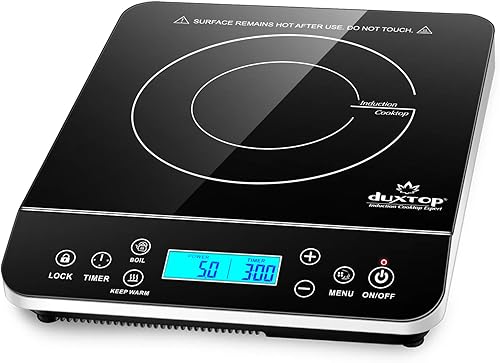
Duxtop 9600LS Portable Induction Cooktop
9.1/10 our score
See it on Amazon -
2
 Best for frequent batch cooking
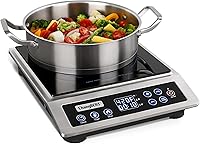
ChangBERT 8-Inch Commercial Induction Cooktop
8.9/10 our score
See it on Amazon -
3
 Best for busy meal preparation
ChangBERT Enhanced Portable Induction Cooktop
8.6/10 our score
See it on Amazon
- 4
 Check it
Nuwave Gold Precision Induction Cooktop
Best for sauce makers - 5
 Check it
Nuwave Flex Precision Induction Cooktop
Best for small kitchens - 6
 Check it
Duxtop 9100MC Portable Induction Cooktop
Best for button-control cooks - 7
 Check it
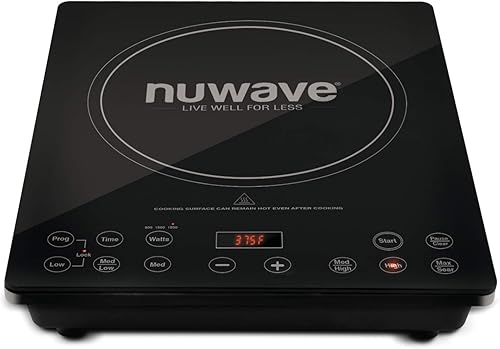
Nuwave Pro Chef Induction Cooktop
Best for searing enthusiasts - 8
 Check it
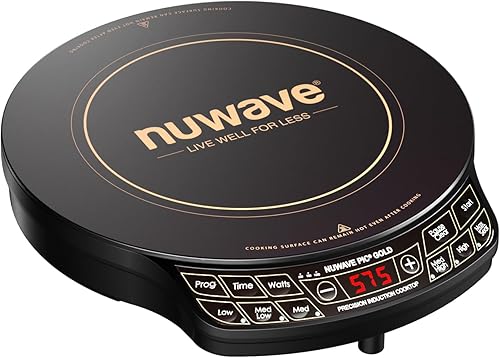
Nuwave Precision Gold Single Burner
Best for timed cooking routines
How we chose the best portable induction cooktops
Useful controls and a good kitchen fit matter more than the longest feature list. HeartyHatch compared the supplied specifications for everyday cooking, repeated use, gentle heat adjustments and compact storage.
The ranking favors broad usefulness, so a lower-ranked model can still be the better choice for a specific kitchen. A cook who wants physical buttons should give that preference more weight than a small difference in editorial score.
We also separated selectable settings from cooking results. A small temperature step gives you a finer adjustment, but it doesn't establish the temperature throughout a pan or guarantee an even simmer.
How these portable induction cooktops compare
Choose between these burners by controls, usable cooking area and available power. Several reach 1800 W, so maximum wattage alone won't narrow the field enough.
Use the table to find suitable candidates, then compare their physical dimensions and cookware requirements. A burner must fit both your work surface and the pans you actually use.
| Product | Best for | Power | Temperature | Controls | Our score |
|---|---|---|---|---|---|
| Duxtop 9600LS Portable Induction Cooktop | everyday home cooking | 100 to 1800 W | 100°F to 460°F | Touch panel with LCD | 9.1 |
| ChangBERT 8-Inch Commercial Induction Cooktop | frequent batch cooking | 200 to 1800 W | 120°F to 460°F | Push buttons | 8.9 |
| ChangBERT Enhanced Portable Induction Cooktop | busy meal preparation | 200 to 1800 W | 120°F to 460°F | Push buttons and dual display | 8.6 |
| Nuwave Gold Precision Induction Cooktop | sauce makers | 1500 W maximum | 100°F to 575°F | Digital touch | 8.4 |
| Nuwave Flex Precision Induction Cooktop | small kitchens | 100°F to 500°F | Digital touch | 8.1 | |
| Duxtop 9100MC Portable Induction Cooktop | button-control cooks | 100 to 1800 W | 100°F to 460°F | Push buttons with large display | 8.0 |
| Nuwave Pro Chef Induction Cooktop | searing enthusiasts | 1800 W maximum | 100°F to 575°F | Digital touch | 7.7 |
| Nuwave Precision Gold Single Burner | timed cooking routines | 1500 W maximum | 100°F to 575°F | Digital touch | 7.6 |
The best portable induction cooktops by use
The 9600LS is the strongest general-purpose choice, while the other picks solve more specific needs. Each recommendation below includes a reason to choose it and a reason to move on.
Duxtop 9600LS: best portable induction cooktop for daily meals
Duxtop 9600LS Portable Induction Cooktop
- 20 power levels from 100 to 1800 W
- 20 temperature settings from 100°F to 460°F
- 10-hour timer
- Fast boil and keep warm buttons
Choose it for varied daily meals, from boiling pasta to warming a sauce. Its broad heat controls, shortcut buttons and child safety lock suit a shared home kitchen.
Pros
- Broad choice of power and temperature settings
- Long countdown timer
- Child safety lock
Cons
- Needs a magnetic cookware base at least 5 in across
- Touch controls won't suit buyers who prefer physical buttons
Choose the 9600LS if you want one extra burner for pasta, soup, eggs and sauces. Its 20 power levels and 20 temperature settings let you switch between controlling heat input and selecting a temperature.
The shortcut buttons are useful when a recipe moves from heating to holding. Keep warm uses a 140°F setting for 1 to 30 minutes, while the countdown timer supports cooking periods up to 10 hours.
Those are separate functions, so don't assume the keep warm button shares the full timer duration. For food that needs safe holding, check the food itself with a suitable thermometer.
The child safety lock helps prevent accidental setting changes in a shared kitchen. It doesn't make a hot pan or the glass beneath it safe to touch.
Skip this model if you strongly prefer physical buttons. The 9100MC offers the same number of heat choices with a button panel, while ChangBERT better fits buyers prioritizing continuous-duty construction.
ChangBERT Commercial: for repeated cooking sessions
ChangBERT 8-Inch Commercial Induction Cooktop
- 9 power levels from 200 to 1800 W
- 18 temperature settings from 120°F to 460°F
- 8 in heating coil
- Continuous-duty circuitry
Continuous-duty circuitry and a stainless steel housing make this a sensible choice for repeated cooking sessions. Choose it when frequent use matters more than numerous heat steps.
Pros
- Circuitry designed for continuous use
- Tactile push-button controls
- ChangBERT identifies it as NSF certified
Cons
- Fewer power steps than the Duxtop models
- 15 in depth needs counter space
Choose this ChangBERT for batch preparation or repeated meals where the burner will spend plenty of time on the counter. Continuous-duty circuitry is its clearest distinction from the everyday home-focused alternatives.
ChangBERT identifies the model as NSF certified and designed for commercial use. That makes it relevant to buyers considering frequent service, though any business installation must still meet its own requirements.
The tactile buttons suit cooks who want a definite press when changing heat. With 9 power levels, however, it offers fewer manual power steps than either Duxtop.
Its 8 in coil is worth considering for cookware with a suitably matched base. The stainless steel housing also suits buyers who prefer a metal-bodied appliance.
Skip it if the burner must fit a shallow worktop or disappear into a small drawer. Its 15 in depth needs planning, and the Enhanced version is the better choice if direct function buttons matter more than a simpler panel.
ChangBERT Enhanced: for frequent changes between tasks
ChangBERT Enhanced Portable Induction Cooktop
- One-click max power button
- 8 in heating coil
- Dual digital display
- 12-hour timer
Dedicated boil and keep warm buttons suit cooks who change tasks often. The dual display keeps the timer visible alongside power or temperature.
Pros
- Direct access to common cooking functions
- Long countdown timer
- Sealed control panel
Cons
- Only 9 power levels
- Same counter footprint as the standard ChangBERT
Choose the Enhanced model if you often move from boiling water to holding a finished dish. Dedicated max power, boil and keep warm buttons reduce repeated adjustments during a busy meal.
Its dual display shows the timer alongside power or temperature. That helps when you want to check both remaining time and the active setting without changing the display.
The 12-hour timer is useful for long recipes that permit this cooking method. It remains a cooking aid, so plan to supervise the food and check liquid levels as needed.
A sealed control panel and full-glass surface give you fewer exposed areas around the controls to wipe. Let the burner cool and follow the care instructions before cleaning.
Skip the Enhanced if you mostly heat a single pan and rarely use shortcuts. It occupies the same counter area as the standard ChangBERT, so the extra functions won't solve a space problem.
Nuwave Gold Precision: for sauces and small heat changes
Nuwave Gold Precision Induction Cooktop
- 100°F to 575°F temperature range
- 5°F temperature steps
- 8 in heating coil
- Adjust heat and time during cooking
Small temperature steps suit cooks who regularly adjust sauces and other gentle-heat dishes. Its taller body needs more storage clearance than the slimmer options.
Pros
- Fine temperature adjustments
- Change heat and time without restarting
- 12 in ceramic glass cooking surface
Cons
- Lower maximum power than the 1800 W picks
- 4.5 in height needs storage clearance
Choose this Nuwave Gold if you regularly adjust sauces, custards or other dishes that need close attention. 5°F setting steps offer smaller changes than broad low, medium and high controls.
You can change heat or time during cooking without starting the process again. That suits recipes where you reduce heat gradually as the food thickens.
The selectable range runs from 100°F to 575°F, but the displayed setting isn't a direct measurement of every part of your food. Stirring, pan material and the amount in the pan still affect the result.
Its 1500 W maximum makes it less appealing than the full-power picks when rapid bulk heating is your main task. The 8 in coil is more relevant than the surrounding 12 in cooking surface when matching a pan.
Skip it if overhead storage space is tight. At 4.5 in tall, this is a less convenient fit for shallow storage than the Flex or Pro Chef.
Nuwave Flex: for tight counters and shallow storage
Nuwave Flex Precision Induction Cooktop
- 10 in deep by 12 in wide
- 2 in height
- 6.5 in heating coil
- 5°F temperature steps
Choose the Flex when a small footprint and easy storage come first. Its smaller coil makes it better suited to appropriately sized cookware than broad skillets.
Pros
- Small counter footprint
- Low storage height
- Adjust heat and time while cooking
Cons
- Smaller coil than several other picks
- Lower maximum temperature setting than the other Nuwave picks
Choose the Flex when keeping a usable preparation area matters more than accommodating broad cookware. Its 10 by 12 by 2 in body makes it the compact option in this group.
The smaller footprint helps if you bring a burner out for one task and put it away afterward. Leave room for ventilation and pan handles rather than measuring only the appliance outline.
Its 6.5 in coil points toward smaller, appropriately matched pots and skillets. A wide pan can extend beyond the main heating area even when it rests on the glass.
Temperature adjustments run in small steps, and you can change heat or time during a recipe. That keeps the compact format useful for more than boiling water.
Skip the Flex if a large skillet is your main cooking pan. A larger-coil option is a better starting point, though pan construction still matters for spreading heat toward the edges.
Duxtop 9100MC: for cooks who prefer physical buttons
Duxtop 9100MC Portable Induction Cooktop
- 20 power levels from 100 to 1800 W
- 20 temperature settings from 100°F to 460°F
- Large display
- 170-minute countdown timer
This is the Duxtop to choose if you prefer physical buttons and a large display. Its heat-setting options match the 9600LS, but its timer is shorter.
Pros
- Broad heat-setting choices
- Physical buttons
- Large display
Cons
- Shorter timer than the 9600LS
- Larger body than the 9600LS
Choose the 9100MC if push buttons and a large display make more sense to you than a touch panel. It offers the same number of power and temperature settings as the 9600LS.
That makes it a practical alternative for everyday boiling, frying and simmering when control style is the deciding factor. You don't need to choose the higher-ranked Duxtop simply because it leads the roundup.
The main timing tradeoff is its 170-minute countdown. That covers many meals, but cooks who rely on longer timed recipes should favor the 9600LS.
Check storage space as well as working space. The 9100MC measures 12.7 in deep, 16.3 in wide and 3.8 in tall, making it larger than the 9600LS.
Skip it if you want the slimmer Duxtop body or its dedicated boil and keep warm controls. Choose this model because you prefer its interface, rather than expecting an advantage in maximum power.
Nuwave Pro Chef: for high-heat cooking with selectable power
Nuwave Pro Chef Induction Cooktop
- 900, 1500 and 1800 W settings
- 100°F to 575°F temperature range
- 5°F temperature steps
- 8 in heating coil
Choose it for a combination of high selectable temperatures and full-power cooking. Its lower wattage options also help you plan around a suitable limited-power supply.
Pros
- High maximum temperature setting
- Selectable wattage limits
- Change temperature and time during cooking
Cons
- Only 3 wattage choices
- 7 lb weight
Choose the Pro Chef if you want high-temperature settings and selectable wattage limits in the same burner. It combines an 8 in coil with 900, 1500 and 1800 W options.
Those power choices are useful when planning around a suitable supply in a kitchen or RV. They don't confirm that an outlet, inverter or shared circuit can support the appliance.
Its temperature range reaches 575°F, with adjustments available during cooking. A high ceiling gives you room for searing, but you should still follow your cookware's heat limits.
For browning, dry the food and avoid crowding the pan. A high setting can't compensate for moisture pooling around food or too much cold food added at once.
Skip the Pro Chef if you want many separate wattage steps or the lightest appliance here. It weighs 7 lb, and the Duxtop models provide more choices for manually adjusting power.
Nuwave Precision Gold: for recipes with a set cooking time
Nuwave Precision Gold Single Burner
- 100°F to 575°F temperature range
- 5°F temperature steps
- Automatic shutoff when cook time ends
- 700, 900 and 1500 W settings
Fine temperature controls and end-of-timer shutoff suit cooks who regularly set a cooking duration. The burner also won't start without cookware.
Pros
- Fine temperature adjustments
- Shuts off when set cooking time ends
- Adjust heat and time without restarting
Cons
- Lower maximum power than the 1800 W picks
- Only 3 wattage choices
Choose this Precision Gold if end-of-timer shutoff fits your cooking routine. It stops heating when the set cook time ends and won't start without cookware on the surface.
That helps define the end of a timed cooking stage, though you still need to check whether the food is done. Residual heat in the pan also continues cooking after power stops.
Its fine temperature controls suit gradual changes, and heat or time can be adjusted without restarting. The 700, 900 and 1500 W choices give you 3 power limits.
Don't confuse this model with the earlier Gold Precision pick simply because both carry the Gold name. Compare the exact controls, body dimensions and functions you want before choosing.
Skip it if fast bulk heating is your main reason for adding a burner. An 1800 W option offers a higher power ceiling, while this model makes more sense for buyers prioritizing its timing and temperature functions.
What should you check before buying a portable induction cooktop?
Check pan compatibility, working space and electrical supply first. Controls and timers matter only after the burner fits those three needs.
Is your cookware compatible with a portable induction cooktop?
A firmly sticking magnet is a useful first check for a magnetic base. Cast iron and some stainless steel cookware work with induction, while plain aluminum, copper and glass need a compatible magnetic base.
Check the underside that contacts the burner rather than the rim diameter printed on the pan. A wide pot can have a much smaller flat base.
Duxtop requires a base at least 5 in across for both models here. Other burners have their own requirements, so a small magnetic saucepan isn't automatically suitable for every induction unit.
Choose a flat base that sits securely without rocking. Our guide to choosing a portable induction cooktop explains the other fit checks to make before buying.
Does the burner fit your counter and pans?
Measure the appliance space, required ventilation clearance and room for the pan handle. A cooktop that fits between two appliances may still leave an awkward or unsafe cooking position.
The glass surface isn't the heating coil. A broad glass top provides support, but it doesn't mean heat reaches every part of a large pan base equally.
Pan thickness and construction help spread heat beyond the coil area. For pancakes or a large skillet meal, matching the pan and heating area matters more than choosing the widest glass top.
Our guide to induction burner and pan size explains that match. Also check where you'll store the cooled burner, including space for its cord.
Can your outlet support the cooktop?
Confirm the appliance's electrical requirements and what else shares the circuit. The Duxtop models specify a 120 V, 15 amp supply, with the 9600LS also described for 110 V use.
A kettle, toaster or other high-power appliance on the same circuit can leave too little capacity for the burner. Two nearby outlets don't necessarily serve separate circuits.
Plan around the manual's connection instructions, and don't assume a power strip or adapter adds capacity. If the circuit arrangement is unclear, have it checked before relying on it.
Our guide to induction burner wattage covers power needs. For the connection itself, see whether an induction burner can use your outlet.
Which heat controls matter for your usual meals?
Choose power mode for direct heat adjustment and temperature mode when a selected temperature suits the task. Neither mode removes the need to watch the pan and adjust as food changes.
Boiling, frying and browning
Power mode is a useful starting point for heating water or managing a frying pan. Reduce the setting once water boils or the pan reaches the heat you need.
Maximum power isn't a default for every recipe. An empty pan can heat quickly, so prolonged full-power preheating can damage cookware or overheat oil.
For browning, allow room between pieces of food and cook in batches if necessary. This helps moisture escape instead of turning the pan into a shallow steaming vessel.
Sauces, simmering and holding
Small temperature steps help you make gradual adjustments, but setting precision isn't food-temperature accuracy. Pan construction, liquid depth and stirring all affect how the food heats.
Portable burners may cycle power at low settings. A thicker pan base can help spread those changes, while regular stirring reduces the chance of scorching thick sauces.
A keep warm function also needs judgment. Check food temperature with an appropriate thermometer rather than assuming the cooktop display establishes a safe holding condition.
Timers and one-burner meal planning
Choose timer length for recipes you actually make. A long countdown offers little benefit if most of your cooking is quick frying or boiling.
A single burner also needs a meal sequence. Prepare cold ingredients first, cook components in a sensible order and plan how finished food will stay at an appropriate temperature.
If most dinners require two pans heating at once, another single burner may be a poor fit. Decide how many active pans you need before focusing on finer control differences.
How do you set up and use a portable induction cooktop?
Set the burner on a stable, level, heat-resistant surface with the clearances required by its manual. Keep the controls reachable and the cord away from hot cookware and walkways.
Start with the pan centered over the cooking zone and its underside clean and dry. Turn the handle inward without placing it over another heat source.
Choose a moderate starting setting for unfamiliar cookware, then adjust as you see how quickly it heats. Don't use a long empty-pan preheat to judge the burner.
Keep vents clear of towels, packaging and nearby objects. A compact appliance still needs airflow while cooking and during any cooling period specified by its instructions.
Don't place lids, utensils or other metal objects on the cooking area. Use a separate trivet for hot cookware rather than shifting it onto the control panel.
A long timer or automatic shutoff doesn't replace supervision. Our guide to using a portable induction cooktop walks through the basic cooking sequence.
How do you prevent cleanup and cooking mistakes?
Let the glass cool, then clean it with a soft cloth and an approved cleaner. Heat transferred from cookware can bake food onto the surface even though induction heats the pan directly.
Wipe away grease and residue before the next meal. Lift heavy cookware when moving it, since dragging a gritty base across glass can leave scratches.
Keep moisture out of vents and don't immerse the appliance. Store it only after it has cooled, with the cord arranged so it isn't pinched or sharply bent.
If a pan isn't detected, check its magnetic base, size and position before increasing heat settings. More power won't make incompatible cookware work.
A high-pitched sound can come from layered cookware. If a sound changes suddenly, an error appears or operation seems abnormal, stop and follow the manual's guidance.
Avoid placing a towel or improvised protector between the pan and glass. Use an accessory only if the cooktop instructions allow it, since added layers can affect heat sensing and operation.
Which portable induction cooktop should you choose?
The best portable induction cooktop for varied daily meals is the Duxtop 9600LS. Choose the 9100MC instead when physical buttons matter more than the longer timer and shortcut functions.
Choose standard ChangBERT for frequent cooking sessions, or Enhanced ChangBERT if direct function buttons and a simultaneous timer display fit your routine. Neither is the space-saving choice for a shallow counter.
Pick Nuwave Gold Precision for small heat adjustments, Flex for a tight kitchen, or Pro Chef for its combination of high-temperature settings and selectable power. Precision Gold suits buyers who prioritize timed shutoff with fine temperature controls.
Let your most-used pan and most common meal break the final tie. If you're still deciding whether this burner type fits your cooking, our portable induction cooktop pros and cons guide is the useful next step.
Our top 3 picks at a glance
-
1
Best for everyday home cooking
Duxtop 9600LS Portable Induction Cooktop
9.1/10 our score
See it on Amazon -
2
Best for frequent batch cooking
ChangBERT 8-Inch Commercial Induction Cooktop
8.9/10 our score
See it on Amazon -
3
Best for busy meal preparation
ChangBERT Enhanced Portable Induction Cooktop
8.6/10 our score
See it on Amazon
Frequently asked questions
What should I look for in a portable induction cooktop?
Start with cookware compatibility, counter space and a suitable electrical supply. Then choose controls that match your meals: power levels for boiling and frying, temperature settings for smaller adjustments, and a timer for timed recipes.
A larger glass surface doesn't necessarily mean a larger heating coil.
Do portable induction cooktops need special pans?
Yes, they need cookware with a magnetic base that meets the burner's size requirements. A magnet should stick firmly to the flat underside, though that alone doesn't establish the right size.
Duxtop requires a base at least 5 in across for the 9600LS and 9100MC.
Can you use a portable induction cooktop in an RV?
Yes, provided the RV's electrical supply supports the cooktop and other connected loads. The Nuwave Pro Chef offers selectable wattage limits, but a lower setting doesn't remove the need to check the circuit.
Our guide to induction cooktops for RVs explains the fit and power checks.
How many watts does a portable induction cooktop need?
Choose wattage for both your cooking tasks and your available electrical supply. Higher maximum power is useful for heating water or recovering heat after adding food, while gentle cooking needs less.
Our guide to induction burner wattage explains how to match power with meals and circuit limits.
Are portable induction cooktops easy to clean?
Yes, their smooth surfaces are generally simple to wipe once cool. Heat from cookware can still bake spills onto the glass, so cleanup matters even without an exposed heating coil.
Use the cleaner and cloth allowed by the manual, keep liquid out of vents, and avoid abrasive pads.