Are Portable Induction Cooktops Worth It?
The main induction cooktop pros and cons are quick, responsive heat and easy cleanup versus cookware limits and electrical requirements. A portable model is worth it when one cooking zone meets your needs and your pans, outlet, and counter space suit it.
On this page (9 sections)
- What are the main induction cooktop pros and cons?
- Is a portable induction cooktop faster and more efficient?
- What cookware works, and what happens if yours doesn't?
- Does a portable induction cooktop need a special outlet?
- Is a single portable burner enough for your cooking?
- How do you set up a portable cooktop in a small kitchen?
- Are portable induction cooktops noisy or hard to clean?
- When is a built-in induction cooktop a better fit?
- How should induction cooktop pros and cons guide your decision?
Portable induction cooktops are worth it when you need one flexible cooking zone and already have suitable pans and an outlet. The main induction cooktop pros and cons are quick heat and simple cleanup versus cookware limits, electrical demand, and reduced space for cooking several dishes.
A portable burner can add capacity to a busy kitchen or tuck away after dinner. Before choosing one, count the pans you use together and check whether your usual cookware will fit.
What are the main induction cooktop pros and cons?
Induction gives you responsive heat without an open flame, but it requires compatible cookware. Portable models add easy storage while limiting how many pans you can heat at once.
Pros of portable induction cooktops
- Quick heat changes: reducing power changes the energy going into the pan without waiting for a conventional heating element to cool.
- Less wasted heat: energy goes into compatible cookware, though the hot pan still warms the room.
- Flat cooking surface: there are no burner grates to remove for routine cleanup.
- Flexible placement: a portable unit can provide an extra zone on a suitable counter.
- No open flame: this removes flame exposure, but hot pans, steam, and spills still cause burns.
Cons of portable induction cooktops
- Cookware restrictions: the base must be magnetic and meet the burner's size requirements.
- Limited capacity: both portable models here heat one pan at a time.
- Electrical demand: a high-power appliance needs a suitable outlet and circuit.
- Possible noise: fans and some cookware can produce sound during use.
- Counter space: ventilation clearance, pan handles, and the cord need room beyond the unit itself.
For a broader overview of the technology and available formats, read our induction cooktop buyer's guide.
Is a portable induction cooktop faster and more efficient?
Induction can heat a suitable pan quickly because it transfers energy directly into its base. A heavy pan or a large pot of water still takes time, so quick response doesn't make every cooking task instant.
Duxtop claims 83% energy efficiency for the 9600LS, while ChangBERT claims up to 83% for its Enhanced model. These figures describe heat transfer, rather than the electricity needed for your particular dinner.
For boiling, use a lid and heat only the water you need. For frying, start below maximum power and increase gradually so you don't overheat an empty pan.
Which portable induction pros and cons favor the Duxtop?
The Duxtop 9600LS suits everyday home cooks who want a compact extra burner with a wide choice of settings. It offers 20 power levels from 100 to 1,800 W and 20 temperature settings from 100°F to 460°F.
Fast-boil and keep-warm buttons reduce menu steps, while a child lock helps prevent accidental setting changes. The timer runs up to 10 hours, but cooking still needs supervision.
Skip it if you prefer physical buttons or need to prepare several pans together. More settings give you finer choices on the control panel; they don't turn one zone into a full stove.
What cookware works, and what happens if yours doesn't?
You need a magnetic, suitably sized pan base for induction to work. Check your current cookware before ordering a burner, since replacing several favorite pans can change the value of the switch.
A magnet that sticks firmly to the base is a useful first check. Cast iron and many stainless steel pans work, while bare aluminum, copper, and glass generally need a separate induction-compatible base built into the cookware.
The Duxtop requires a magnetic base at least 5 in across. Its pan detection shuts the unit off after 60 seconds without suitable cookware.
Measure the flat base, rather than the rim, and check that it sits level. A wide skillet can overhang the active heating area, leaving its outer edges dependent on the pan's ability to spread heat.
For more on matching cookware to a burner, see what size pan fits an induction burner.
Does a portable induction cooktop need a special outlet?
These portable models use 120 V power, but the outlet and circuit still need to suit the appliance. Duxtop specifies a 110/120 V, 15 amp outlet; ChangBERT's Enhanced model is rated at 1,800 W.
A plug that fits doesn't confirm that the circuit can handle everything connected to it. Avoid running another high-power appliance on the same circuit when that would exceed its capacity.
Follow the manual's connection instructions, including any restrictions on extension cords or power strips. A breaker that trips repeatedly needs attention rather than repeated resets.
Our guide to induction burner wattage explains power choices. Read whether an induction burner can plug into any outlet before planning a cooking spot away from your main kitchen.
Is a single portable burner enough for your cooking?
One burner works well for one-pot meals or extra cooking capacity. It becomes awkward when pasta, sauce, and vegetables all need heat at the same time.
Think through a normal week of meals before buying. If you often move a finished dish aside to start another, a single burner can work; if timing several pans is central to dinner, choose more zones.
Who should choose the ChangBERT Enhanced model?
The ChangBERT Enhanced suits frequent cooking and cooks who prefer physical controls. Its push buttons give tactile feedback, and the dual display shows the timer alongside power or temperature.
It has 9 power levels, 18 temperature settings, an 8-inch heating coil, and a timer that runs up to 12 hours. ChangBERT identifies it as NSF certified and designed for continuous-duty use.
Choose it for a frequently used extra cooking station or when button controls matter more than a wider range of settings. Skip it if you need several zones or can't spare its deeper counter footprint.
If 2 pans are your usual minimum, compare a single and double induction cooktop. Check how a double unit shares available power between its zones.
How do you set up a portable cooktop in a small kitchen?
Choose a stable, level surface with the required ventilation clearance. Measure the full cooking area before buying, including space for handles, the cord, and safe access to the controls.
The Duxtop measures 14 in wide, 11.4 in deep, and 2.5 in high. The ChangBERT measures 12.2 in wide, 15 in deep, and 2.8 in high.
Mark the footprint on your counter with paper, then place your usual pan over it. This reveals cramped handles and blocked prep space that the appliance dimensions alone can miss.
Keep air openings clear and route the cord away from hot cookware and counter edges. Let the unit cool before moving or storing it.
For the first meal, use a familiar pan and a moderate setting while you learn the controls. Our guide to using a portable induction cooktop covers the basic workflow.
Are portable induction cooktops noisy or hard to clean?
Induction surfaces are easy to wipe after they cool, but they aren't silent or always cool to the touch. Heat from the pan transfers back into the glass.
Duxtop notes that layered cookware can make high-pitched sounds. ChangBERT has a full-glass surface and sealed control panel, which reduce places for spills to collect.
Let the surface cool, then use the cleaning method and cleaner allowed by the manual. Avoid abrasive pads, lift heavy pans rather than dragging them, and keep liquid out of ventilation openings.
A temperature setting isn't a thermometer reading of your food. Stir sauces, check doneness directly, and avoid using high power simply because you want a steady simmer.
Read why an induction cooktop can make noise to identify common sounds. Before adding anything between the pan and glass, check whether an induction cooktop mat is useful and confirm the cooktop allows it.
When is a built-in induction cooktop a better fit?
A built-in model suits a kitchen that needs several cooking zones every day. It requires installation planning, so choose it as a permanent appliance rather than a movable extra burner.
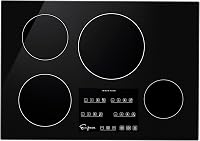
The Empava Ease 30-Inch has 4 zones, touch controls, boost, a child lock, and independent zone timers. It is a drop-in, hardwired cooktop.
Choose it when you want to cook several parts of dinner together and are ready to arrange installation. Skip it for a temporary kitchen, rental counter setup, or cooking station you need to pack away.
Before ordering, confirm the required cutout, clearances, and electrical supply with the installation instructions and your installer. A nominal 30-inch width doesn't establish whether an existing opening fits.
Our guide to choosing a built-in induction cooktop explains the measurements and layout decisions to check first.
How should induction cooktop pros and cons guide your decision?
Choose the Duxtop for occasional or everyday extra-burner use, the ChangBERT for frequent use with physical controls, or the Empava for a permanent multi-pan kitchen. Start with cookware fit, electrical supply, and cooking capacity before comparing convenience features.
A portable model earns its counter space when it solves a specific need, such as boiling a side dish while your stove is full. Skip a single burner if your normal meals depend on several pans finishing together.
Use these induction cooktop pros and cons to narrow the format first, then compare models in our portable induction cooktop guide. If cookware compatibility is the main obstacle, compare an induction burner with a hot plate; for a permanent kitchen, read induction vs electric cooktops.
Frequently asked questions
Are portable induction cooktops worth buying?
Yes, if a single extra cooking zone solves a regular need and your cookware works with induction. A portable burner suits small kitchens, occasional overflow cooking, and trying induction before a remodel.
Skip one if most meals need several pans or you lack a suitable outlet and counter space.
What are the main disadvantages of portable induction cooktops?
The main drawbacks are magnetic cookware requirements, limited cooking capacity, counter space use, and electrical demand. Some pans also hum or make high-pitched sounds.
Before buying, check your pan bases, the burner's size limits, and its electrical instructions rather than choosing mainly by maximum power or timer length.
Do portable induction cooktops use less electricity?
Induction sends heat directly into compatible cookware, which can reduce wasted heat compared with a conventional electric burner. Total electricity use still depends on cooking time, power settings, pan choice, and the food.
An efficiency claim alone doesn't show how much energy your usual meals will need.
Can you use any pan on a portable induction cooktop?
No, you need a compatible magnetic base that meets the burner's size requirements. A magnet that sticks firmly across the base is a useful first check, but shape and size also matter.
Bare aluminum, copper, and glass cookware generally won't work unless they include an induction-compatible base.