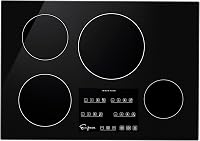
How to Choose a Built-In Induction Cooktop
To choose an induction cooktop, check the counter cutout, electrical circuit and cookware first. Then match the zone layout, controls and timer functions to the meals you cook most.
On this page (12 sections)
- How to choose an induction cooktop in the right order
- What size built-in induction cooktop fits your counter?
- Which cookware works with induction?
- What electrical setup does a built-in model need?
- How many cooking zones will your pans actually fit?
- Which controls and safety features matter most?
- Which built-in induction cooktop fits your kitchen?
- How do you compare these cooktops without repeating every feature?
- What should you do during setup and first use?
- How do you care for the glass surface?
- What mistakes should you avoid before ordering?
- How to choose an induction cooktop you will use comfortably
To choose an induction cooktop, check the counter cutout, electrical circuit and cookware first, then compare how comfortably your usual pans fit. A model that suits your kitchen and meals is a better choice than one with extra functions you rarely use.
For built-in models, the advertised width is only a starting point. The opening below the glass, installation clearances and electrical supply determine whether the appliance can go into your counter.
For a wider overview of induction features and trade-offs, start with our induction cooktop buyer's guide. Here, the focus is choosing a permanent built-in model and avoiding costly fit mistakes.
How to choose an induction cooktop in the right order
Choose by installation fit, pan layout and everyday controls, in that order. Eliminate models that fail the first step before spending time comparing convenience features.
Start with a simple note containing your counter measurements, electrical supply and the base sizes of your main pans. Add the meals you cook most often, including which pots share the surface.
A household that mainly uses a skillet and saucepan has different needs from one that regularly cooks with a stockpot, sauté pan and 2 smaller pots. Count the cookware you actually use together.
Use these 3 decisions to narrow the field:
- Can it be installed? Confirm the opening, clearances, wiring and any oven below.
- Can your usual meal fit? Check pan bases, spacing and access to handles.
- Will the controls help? Compare zone selection, heat adjustment and timer behavior.
Treat optional functions as tie-breakers after those questions are settled. Boost cannot fix crowded pans, and a timer cannot solve an unsuitable circuit.
What size built-in induction cooktop fits your counter?
Choose a cooktop using the required cutout and clearances, not its outside width alone. Measure the existing opening and compare it with the installation manual for the exact model.
A replacement cooktop must both fit into the opening and overlap it as required. A larger opening can be a problem just as a smaller one can, so do not assume the glass will cover every gap.
Before buying, record:
- Cutout width and depth
- Available counter space around the opening
- Countertop thickness and material
- Cabinet, drawer and support space below
- Required distance from walls and overhead surfaces
- Oven model and installation requirements, if one sits underneath
Check the space below the counter for brackets, drawers or other parts that could block the appliance or required airflow. A shallow appliance still needs the full clearance stated in its instructions.
If you are replacing a gas cooktop, include the existing gas connection in the installation plan. Arrange proper disconnection rather than treating the job as a simple appliance swap.
The best built-in induction cooktops guide compares built-in options, while our 30-inch induction cooktops guide focuses on that common width. For a narrower kitchen plan, see 24-inch induction cooktops.
Which cookware works with induction?
Choose magnetic cookware with flat bases that suit the cooking zones. Cast iron and many stainless steel pans work, but stainless steel compatibility depends on how the base is made.
Check for an induction symbol or the cookware maker's guidance. A magnet that sticks firmly to the underside is a useful first check, though it does not confirm that the pan meets a cooktop's size requirements.
Measure the flat cooking base rather than the widest part of the rim. A flared skillet can look large while having a much smaller base.
Inspect older pans for rocking or warping before planning to keep them. A pan that sits poorly can be awkward to use even if its base is magnetic.
Do not replace a whole cookware set before checking what you have. Sort pans into compatible, incompatible and uncertain groups, then resolve the uncertain ones before choosing a cooktop.
Our guide to induction burner size versus pan size explains how to match bases with cooking areas. If you are new to the technology, what an induction cooktop is explains how heat forms in the cookware.
What electrical setup does a built-in model need?
Confirm the exact voltage, circuit and connection requirements before ordering. A countertop burner's outlet requirements do not tell you what a built-in cooktop needs.
The Frigidaire Gallery model here operates on 240V and requires a 30-amp minimum circuit. Both Empava models are hardwired, so their installation manuals must guide the electrical plan.
Have a qualified electrician check the breaker, wiring and connection point together. An existing connection that looks suitable does not establish that the whole circuit matches the new appliance.
For a remodel, settle this before the counter is cut. Electrical work can affect the project schedule and total installation cost, especially when changing from gas.
Also check how the cooktop manages power across zones. Depending on the model, boost or simultaneous high-heat cooking may involve shared power limits.
Our guide to induction burner wattage explains power terms. If permanent installation does not suit your space, the portable induction cooktop guide covers countertop alternatives.
How many cooking zones will your pans actually fit?
Choose the layout that fits your busiest regular meal, rather than buying on zone count alone. Four marked zones do not guarantee comfortable space for four large pans.
Arrange your usual cookware on a table and measure its combined footprint. Include handles, since a handle that blocks another pot can make an otherwise suitable layout awkward.
Compare that arrangement with the cooktop's zone diagram. Check that a rear pot can be lifted without catching a front pan and that a large skillet will not cover the controls.
How to choose induction cooktop zones for your meals
Match the zones to the pan bases you use most, then check the rest of your cookware. A large stockpot used once a month should not outweigh the saucepan and skillet used every night.
For regular family meals, consider a pasta pot, sauce pan and vegetable pan together. For batch cooking, check room for wider cookware and enough space to stir safely.
Do not assume an oversized griddle can span separate zones. Only plan on that arrangement when the cooktop and cookware instructions support it.
Which controls and safety features matter most?
Choose controls that make zone selection and heat changes easy to understand, then compare safeguards. You should be able to identify the active zone without guessing.
Look at the control diagram before buying. Check whether each zone has a direct adjustment or whether you must select a zone before changing its heat.
Consider who will use the cooktop. Front controls may be easier for some people to reach, while a clear display matters for anyone who finds small symbols hard to read.
A residual-heat indicator warns that the surface remains hot from contact with cookware. Induction does not make the glass safe to touch immediately after cooking.
Child locks help prevent unintended operation, but their exact behavior varies. Learn whether the lock blocks startup, changes during cooking or both.
Timers need the same attention. A countdown alarm and a timer that switches off a zone serve different purposes, so confirm what happens when time runs out.
Keep cooking attended even with automatic shutoff. A timer follows the time you enter; it does not judge whether food is ready.
Which built-in induction cooktop fits your kitchen?
Choose the 24-inch Empava for a narrower counter plan, the 30-inch Empava for separately timed dishes, or the Frigidaire for its front controls and defined element sizes. Each choice still depends on installation fit and cookware spacing.
These models illustrate different buying priorities. Use the sections below to decide which priority matches your kitchen.
Empava Ease 24-Inch Built-In Induction Cooktop
The Empava Ease 24-Inch suits a smaller kitchen that still needs four cooking zones. Its narrower format is useful when preserving counter workspace matters more than gaining a wider cooking surface.
Best for small kitchens
It offers 9 heat settings and measures 23.23 in wide, 20.47 in deep and 2.16 in high. Those are appliance dimensions, so use the required cutout measurements when planning installation.
Empava allows installation above its 24-inch or 30-inch under-counter single wall ovens. Check the instructions for the exact appliance combination rather than extending that approval to other ovens.
Choose it if your main cookware fits comfortably within a narrower layout. It makes sense for cooks who regularly use a few modest-size pans and want more counter space beside the cooktop.
Skip it if you often use several wide pans together. Four zones on a compact surface are only useful when your cookware can share them without crowding.
Empava Ease 30-Inch Built-In Induction Cooktop
The Empava Ease 30-Inch suits cooks who manage dishes with different finish times. Its independent zone timers are a practical reason to choose it over a model whose timer behavior does not fit your routine.
Best for multitasking cooks
It has 9 power levels, pause, overheating protection and automatic shutoff. The frameless black glass surface measures 30 in wide, 21 in deep and 2.17 in high.
Choose it if you regularly coordinate rice, vegetables and a main dish across separate zones. Set each timer for a specific task, while checking the food yourself as cooking progresses.
The pause function is another control to understand before use. Read how it affects active zones and timers so you know what will happen when cooking resumes.
Skip it if your counter plan cannot accommodate the wider installation. Also avoid choosing it for timers alone if you mainly cook one-pan meals and a narrower model already meets your needs.
Frigidaire Gallery 30-Inch Induction Cooktop
The Frigidaire Gallery suits buyers who prioritize front control access and want specific element sizes to compare with their pans. Its layout includes two 8-inch and two 7-inch elements.
Best for front control access
The capacitive touch interface uses a white display. The appliance measures 30 in wide, 21.38 in deep and 2.88 in high, making below-counter clearance part of the fit check.
Frigidaire identifies this model as ADA compliant. If access is a buying priority, also check the installed counter height, approach space and reach to the rear cookware.
Choose it when the element arrangement matches your everyday pans and front controls make operation more comfortable. Compare the control position with your largest skillet to make sure the handle and pan will not obstruct access.
Skip it if your cookware needs a layout these elements cannot accommodate. It also requires an installation plan that supports the electrical requirements noted above.
How do you compare these cooktops without repeating every feature?
Compare the reason to choose each model and its main fit constraint. Use this table as a shortlist, then resolve installation details with the manual and installer.
| Model | Main reason to choose it | Main reason to rule it out |
|---|---|---|
| Empava Ease 24-Inch Built-In Induction Cooktop | Preserve counter space with a narrower cooking surface | Your usual pans crowd the layout |
| Empava Ease 30-Inch Built-In Induction Cooktop | Manage separate cooking tasks with independent timers | The wider installation does not fit your kitchen |
| Frigidaire Gallery 30-Inch Induction Cooktop | Prioritize front controls and compare known element sizes | The pan arrangement or required installation does not suit you |
Avoid ranking these by appliance width alone. The better choice is the one that passes your fit checks and supports the meals you repeat every week.
What should you do during setup and first use?
Start with a complete installation check and one familiar pan, then learn the controls before cooking a full meal. Keep the manual accessible until zone selection, locking and timers feel clear.
Before the first meal, remove packaging and clean the glass as directed. Keep required ventilation openings clear and make sure stored items below do not interfere with the installation.
Place a compatible pan in the center of a suitable zone. Begin with a moderate setting and adjust gradually, since induction can respond faster than the cooktop you are replacing.
Do not leave an empty pan heating while you prepare ingredients. Reserve boost for tasks suited to rapid heating, rather than making it the default for every pan.
Keep the control area dry and free of utensils. Our guide to using an induction cooktop explains basic pan placement and heat adjustment for new users.
How do you care for the glass surface?
Clean after the surface has cooled enough to handle safely, using the method and cleaner allowed by the manufacturer. A smooth surface is easy to wipe, but grit and cookware can still damage it.
Lift pans instead of sliding them, especially heavy cast iron. Check that pan bottoms are clean before placing them on the glass.
Wipe away grease and ordinary food residue regularly so it does not build up. Follow the manual's prompt-cleaning instructions for sugary spills or melted material.
Avoid abrasive pads and unsuitable cleaners. If a scraper is permitted, use the specified type and method rather than a kitchen knife.
Do not assume a protective mat is suitable for your cooktop. Read our induction cooktop mat guide before adding anything between cookware and glass.
What mistakes should you avoid before ordering?
Avoid ordering before the installation plan and cookware fit are settled. Most preventable buying errors come from treating a size label or feature list as proof that the appliance suits the kitchen.
Use this final checklist:
- Confirm the exact cutout rather than copying the old cooktop's outside dimensions.
- Have the circuit assessed instead of assuming the existing breaker is enough.
- Check allowed oven combinations and below-counter airflow.
- Measure pan bases rather than rims.
- Compare your usual pan arrangement with the zone diagram.
- Read timer and lock instructions before choosing based on those features.
- Arrange countertop work only after the model's installation requirements are confirmed.
If a requirement remains unclear, resolve it before delivery. That is especially useful when countertop changes would be difficult to reverse.
How to choose an induction cooktop you will use comfortably
Choose the Empava Ease 24-Inch when saving counter space matters and your regular pans fit its compact layout. Choose the Empava Ease 30-Inch when separately timed dishes are a regular part of dinner.
Choose the Frigidaire Gallery 30-Inch when front control access and its element arrangement fit your needs. Rule out any model that requires an installation change you do not want to make.
The final step in choosing an induction cooktop is to put your measurements, cookware list and installation requirements beside the shortlist. Compare more options in our built-in induction cooktop guide.
Frequently asked questions
How do I choose the right size built-in induction cooktop?
Choose the size that fits your counter opening and usual pan arrangement. Compare the installation manual's cutout dimensions, countertop thickness limits and clearances with your kitchen measurements.
A 24-inch or 30-inch label is a general size, so it cannot confirm a replacement fit by itself.
What cookware works on an induction cooktop?
Use cookware with a magnetic base that meets the cooktop's pan-size requirements. Cast iron and some stainless steel pans qualify, while stainless steel construction varies.
Check for an induction symbol or cookware guidance, use a magnet as an initial check, and measure the flat base rather than the rim.
Does a built-in induction cooktop need a special electrical circuit?
Many built-in induction cooktops require a dedicated circuit and a hardwired connection. The exact voltage, breaker, wiring and connection requirements depend on the model.
Have a qualified electrician compare the installation instructions with your existing supply before ordering, especially if you are replacing a gas cooktop.
Is a 24-inch induction cooktop large enough?
A 24-inch cooktop can be enough if your usual pans fit together without blocking neighboring zones or controls. Four zones do not guarantee room for four large pots.
Compare your busiest regular meal with the zone layout, and choose a wider surface if your cookware needs more space.
What should I compare besides cooktop width?
Compare the cutout, electrical requirements, usable pan layout, control access and timer behavior. Check ventilation space below, allowed oven combinations and the supported pan-base sizes.
Then decide which extra functions solve a regular cooking need, such as separate timers for dishes that finish at different times.