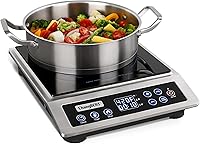
Induction Cooktop vs Gas: Which Should You Buy? (October 2026)
For induction cooktop vs gas, choose induction for easy cleanup and responsive heat with compatible pans, or gas for visible flame control and broader cookware choice. Check your connections and favorite pans before buying.
On this page (11 sections)
- Induction cooktop vs gas: which fits your cooking?
- Will your favorite cookware work?
- How does induction vs gas heat control differ?
- What setup does each cooking method need?
- Is induction cheaper to run than gas?
- Which surface is easier to clean and maintain?
- Does induction remove the need for ventilation?
- Which safety and use differences matter daily?
- Which induction option suits your kitchen?
- Which mistakes should you avoid before switching?
- Induction cooktop vs gas: make the final choice
Choose induction for responsive heat and easy-wipe glass, or gas for visible flame control and broader cookware choice. The induction cooktop vs gas decision starts with your favorite pans, kitchen connections and cooking habits.
Induction heats compatible cookware through a magnetic field; gas burns fuel beneath the pan. Both can handle everyday meals, but they ask different things of your kitchen and the person cooking.
The 3 induction options below cover a portable trial, a compact built-in installation and a wider permanent replacement. They help you choose a route into induction; they aren't a model-by-model comparison with a specific gas cooktop.
 Best for compact kitchen remodels
Empava Ease 24-Inch Built-In Induction Cooktop
Induction cooktop vs gas: which fits your cooking?
Induction fits cooks who value quick heat changes and simpler cleanup; gas fits cooks who want flame feedback and cookware flexibility. Start with the meals you make most often, rather than choosing by habit alone.
| Your priority | Better starting point | What to check |
|---|---|---|
| Wiping down after daily meals | Induction | Glass care instructions and pan condition |
| Keeping nonmagnetic cookware | Gas | Pan stability and burner fit |
| Trying a new cooking method | Portable induction | Outlet capacity and counter space |
| Cooking several dishes together | Either built-in type | Space for your actual pans |
| Flame charring or rounded wok cooking | Gas | Approved supports and appliance instructions |
| Avoiding fuel combustion indoors | Induction | Electrical supply and cooking ventilation |
Skip a full induction conversion for now if your essential pans are incompatible and replacing them would strain your budget. A portable burner can still handle selected jobs alongside an existing stove.
Skip gas if avoiding an open flame and indoor fuel combustion is a main reason for changing appliances. Induction addresses those concerns, although frying and searing still need ventilation.
For a broader overview of sizes, layouts and controls, use our complete induction cooktop buyer's guide.
Will your favorite cookware work?
Gas accepts more cookware materials; induction needs a magnetic base that fits the cooking zone. Check your everyday skillet, smallest saucepan and largest pot before planning a switch.
Hold a magnet against the underside of each pan. A firm attraction is a useful first check, but cookware instructions and the cooktop's size requirements still decide suitability.
Cast iron and many stainless-steel pans work on induction. Plain aluminum, copper, glass and ceramic cookware need a compatible magnetic base, and stainless steel alone doesn't guarantee compatibility.
Check base diameter, not rim diameter. A wide frying pan may have a much smaller flat base, while a tiny saucepan may fall below a cooktop's detection limit.
Flat bases also matter because a rocking or warped pan sits poorly on glass. See our guide to matching induction burner size to pan size before choosing around a favorite large skillet.
Gas offers more freedom in pan material, but the pan must still sit securely on its support. Keep flames beneath the base rather than letting them climb the sides.
If you're new to the technology, how induction cooktops work explains why some pans heat and others don't.
How does induction vs gas heat control differ?
Both respond quickly to a control change, but induction uses numbered settings while gas shows you a flame. In either case, a heavy pan holds heat after you turn the setting down.
Induction cooktop vs gas for simmering and searing
For simmering, judge the food's movement rather than relying only on a setting number. Gentle bubbles suit a sauce better than a rolling boil, regardless of the heat source.
Some induction cooktops cycle power at lower settings, so a thick pan base can help smooth changes. Gas has its own limit: the lowest stable flame may still be too strong for a small amount of sauce.
For searing, preheat with care and follow the pan maker's directions. Avoid leaving an empty pan on high heat or assuming a boost function is the right starting point for every skillet.
Temperature presets aren't a measurement of the food inside the pan. Stir sauces, watch oil and use a food thermometer where a recipe calls for an internal temperature.
Gas is the simpler choice for direct flame charring and traditional rounded wok techniques with suitable supports. Induction suits flat-bottom cooking, but lifting a pan can interrupt heating when pan detection stops power.
What setup does each cooking method need?
Portable induction needs a suitable outlet and counter space; built-in induction and gas need connection, clearance and fit checks. Confirm these before ordering, especially when changing fuel types.
For a portable burner, choose a level, dry surface with room for its cooling vents. Keep the cord away from hot cookware and position the unit where a heavy pot won't sit near the counter edge.
Check what else uses the same electrical circuit. A plug that fits doesn't prove the circuit can support another high-power appliance alongside a kettle or microwave.
Our guide to induction burner outlets and amps explains what to check before choosing a plug-in model. Follow the appliance instructions on direct wall connections and extension cords.
For built-ins, measure the existing opening, counter thickness and space below the appliance. Overall appliance width isn't cutout width, and a nominal size match doesn't confirm a drop-in replacement.
Have an electrician assess the required supply and connection for induction. A gas installation needs a suitable fuel connection, approved clearances and professional work on any line changes.
Changing from gas may also mean arranging safe disconnection and capping of the unused supply. If you're replacing a range with a cooktop, plan the separate oven space too.
Is induction cheaper to run than gas?
Induction directs heat into cookware efficiently, but your total cost depends on local energy rates and the work needed to install it. Separate running costs from the cost of changing your kitchen.
A gas flame releases heat around the pan as well as into it. Induction reduces that route of heat loss, which can also make cooking feel less hot around the appliance.
Compare the whole project: electrical work, gas work, counter changes, ventilation and replacement cookware. Those costs may matter more than small differences in routine energy use.
A functioning gas kitchen with suitable ventilation can be practical to keep. A remodel that already includes electrical work gives you a different starting point for choosing induction.
If you're also considering a conventional electric surface, read induction vs electric cooktop to separate those choices.
Which surface is easier to clean and maintain?
Induction usually makes daily wiping easier; gas requires cleaning around grates, burner caps and openings. Neither benefits from waiting until repeated cooking bakes spills into place.
Let induction glass cool as directed, then remove splashes with an approved cloth and cleaner. Use only the scraper or cleaning method allowed by the manufacturer for stuck residue.
Lift heavy cookware rather than dragging it across the glass. Wipe grit from pan bottoms, and avoid dropping cast iron or using the surface as a chopping board.
On gas, let removable parts cool before cleaning them. Clear food from burner openings using the approved method, then dry and reseat parts correctly before use.
Keep induction cooling vents clear and gas burner parts properly assembled. These small care habits matter more than polishing either surface until it looks spotless.
Does induction remove the need for ventilation?
No, induction still needs ventilation for smoke, grease and steam; gas also produces combustion byproducts. Choose ventilation around both the appliance requirements and the cooking you do.
A hood that exhausts outdoors carries captured air out of the kitchen. A recirculating hood filters air and returns it indoors, so it doesn't perform the same job.
Use the hood during cooking and keep its filters maintained. Check that the hood covers the cooking area and meets the appliance's installation requirements.
Switching to induction removes fuel combustion at the cooktop, but a smoking skillet still creates indoor pollutants. The EPA's guidance on combustion pollutants in the home explains the added concern with fuel-burning appliances.
Which safety and use differences matter daily?
Induction avoids an open flame, but its glass can become hot from the pan; gas adds hot grates and exposed flames. Keep handles turned inward and supervise cooking on either surface.
Treat a heat indicator as useful information rather than permission to touch the glass. A pan can transfer enough heat back into an induction surface to cause a burn after power stops.
Control locks help prevent accidental setting changes, but they don't make hot cookware safe. Keep towels, packaging and other combustible items away from the cooking area.
Induction may produce fan noise or cookware sounds, which can surprise someone switching from gas. Duxtop notes that layered cookware can make high-pitched sounds; don't choose induction expecting a silent kitchen.
During an outage, induction won't operate without a suitable power source. Don't assume a gas appliance will work either, since ignition and other functions depend on the model's instructions.
Which induction option suits your kitchen?
Choose the Duxtop for a reversible first step, the 24-inch Empava for a compact planned installation, or the 30-inch Empava for a full kitchen replacement. A portable burner and a built-in cooktop solve different problems.
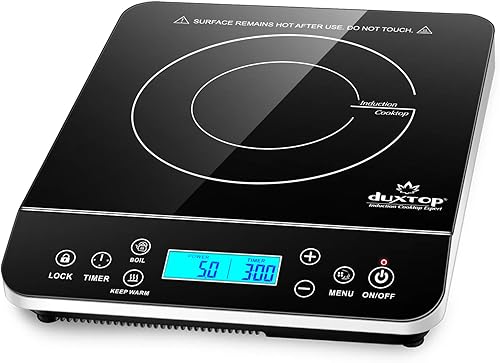
Duxtop 9600LS: try induction before a remodel
The Duxtop suits renters, occasional extra-burner needs and cooks who want to learn induction controls before replacing a stove. Its single zone also lets you keep using gas for other pans.
It offers 20 power levels from 100 to 1800 W, plus 20 temperature presets. Its 110/120 V, 15 amp outlet connection avoids the hardwired installation required by the built-ins here.
Use magnetic cookware with a base at least 5 inches across. Auto-pan detection shuts the burner off after 60 seconds without suitable cookware, but you should still switch it off when finished.
Skip it as your sole cooking surface if you routinely need several pans at once. Our Duxtop 9600LS review covers its controls and features in more detail.
Empava Ease 24-Inch: fit a compact permanent kitchen
The smaller Empava suits a remodel where counter space is limited but a portable burner won't cover daily meals. It combines 4 cooking zones, 9 heat levels, pan-size sensing and a hot-surface indicator.
Its overall dimensions are 20.47 x 23.23 x 2.16 inches, in depth x width x height. Match the separate installation requirements to your counter and hardwired electrical connection.
Before buying, compare zone placement with the bases and handles of the pans you use together. Four zones don't automatically mean room for 4 large pieces of cookware.
Skip this model if your existing opening doesn't match or your usual meal setup feels cramped. Our built-in induction cooktop guide helps with permanent installation choices.
Empava Ease 30-Inch: replace a full cooking surface
The larger Empava suits a planned kitchen replacement where separate zone timers help manage several dishes. It has 4 zones, 9 power levels, a boost function and a residual-heat display.
Its overall dimensions are 21 x 30 x 2.17 inches, in depth x width x height. It also requires a hardwired drop-in installation, so confirm the opening and supply before committing.
Use the independent timers for dishes with different cooking times, while continuing to watch the food. A countdown doesn't judge sauce thickness, browning or whether a pan is boiling dry.
Skip it if you need a temporary appliance or can't arrange the required installation. Choose it over a compact model only when its layout and fit serve your kitchen better.
Which mistakes should you avoid before switching?
Avoid buying around a width label, burner count or maximum power figure alone. Your pans, circuit and daily cooking routine reveal more about whether a cooktop fits.
- Counting zones instead of usable space: check the pans you cook with together, including handles.
- Replacing every pan at once: identify compatible cookware first, then replace only the pieces you need.
- Using maximum heat for everything: start moderately and adjust as the food responds.
- Ignoring installation work: confirm the connection and opening before ordering a built-in appliance.
- Treating automatic shutoff as supervision: remain nearby when frying, boiling or reducing food.
If you already have a usable stove, a portable induction burner offers a practical way to learn your preferred settings. Cook familiar meals with compatible pans before deciding whether to convert the whole kitchen.
Induction cooktop vs gas: make the final choice
Choose induction if compatible cookware, simpler cleanup and avoiding an open flame match your priorities. Choose gas if your essential pans or flame-based cooking methods make it the better daily fit.
For an uncertain buyer, the Duxtop is a manageable first step. For a permanent conversion, choose between the Empava sizes only after confirming electrical supply, cutout requirements and room for your pans.
Keep a working gas setup if the conversion work outweighs the benefits you care about. Use our induction cooktop pros and cons guide to check the remaining trade-offs before making that decision.
Frequently asked questions
Is induction better than gas for cooking?
Induction suits cooks who want responsive heat and easier surface cleanup, while gas suits those who value a visible flame and broader cookware choice. Neither makes every dish better.
Choose around your everyday pans, cooking methods and kitchen connections, then compare controls and burner layout.
Does induction heat food faster than gas?
Induction can heat compatible cookware quickly, but there is no single speed advantage that applies to every model and meal. Output, pan construction, food quantity and cooking method all matter.
A fast boil also says little about how well a cooktop handles a gentle simmer.
Can you use any pan on an induction cooktop?
No, induction requires cookware with a compatible magnetic base and suitable dimensions. Cast iron and some stainless steel work, while plain aluminum and copper need an induction-compatible base.
Check the underside rather than the rim diameter, and confirm compatibility in the pan and cooktop instructions.
Does induction need special wiring?
Built-in induction commonly requires a dedicated electrical connection, while portable models can use a suitable household outlet. The Duxtop 9600LS uses a 110/120 V, 15 amp outlet.
Both Empava models here require hardwired installation, so have an electrician confirm the circuit and connection requirements before ordering.
Is an induction cooktop safer than gas?
Induction removes the open cooking flame and fuel combustion at the cooktop, but hot cookware, hot glass and cooking oil still present risks. Pan detection and control locks can help with specific hazards.
Keep supervising food, use ventilation and let the surface cool before cleaning.