How Much Does an Induction Cooktop Cost?
Induction cooktop cost starts with the appliance: a portable single burner usually needs the smallest budget, while a built-in model can add countertop and electrical work. Include compatible cookware and setup before comparing your options.
On this page (6 sections)
- How much does an induction cooktop cost by type?
- Does a double-burner induction cooktop justify the extra cost?
- Why can a built-in induction cooktop cost more overall?
- What extra costs belong in your induction budget?
- How can setup and care prevent avoidable costs?
- Which induction cooktop should you choose for your budget?
Induction cooktop cost is usually lowest for a portable single burner, while a built-in cooktop can add countertop fitting and electrical work. The useful comparison is your full setup cost, including any pans you need.
Start with the meals you cook most often. One extra burner, a two-pan dinner station, and a permanent kitchen cooktop solve different problems, so they deserve different budgets.
How much does an induction cooktop cost by type?
Portable single burners usually need the smallest budget, double-burner countertop units tend to cost more, and built-in models can involve the most setup work. Prices overlap, so compare complete setups within each format.
| Type | Best fit | Costs to check beyond the appliance |
|---|---|---|
| Portable single burner | Extra cooking space or one-pan meals | Compatible pan and any needed outlet work |
| Double countertop burner | Two dishes cooking together | Suitable circuit, cookware, and counter space |
| Built-in cooktop | Permanent kitchen cooking station | Fitting, electrical work, and old-appliance removal |
A portable burner is also a practical way to try induction before replacing a full cooktop. You can learn how your pans respond without committing to a counter opening.
The complete induction cooktop buyer's guide explains the main styles and features. Choose your format before comparing controls or paying for extra cooking zones.
What affects portable induction cooktop cost?
Controls, heat settings, timers, and size help separate portable models. Pay for features that match your meals, such as a long timer for extended cooking or easy heat changes for sauces.
More temperature steps don't guarantee that food stays at the displayed temperature. Pan thickness, ingredients, and stirring still matter, so don't choose by the number of settings alone.
Duxtop 9600LS: for an extra everyday burner
The Duxtop suits cooks who want a flexible extra burner for boiling, simmering, and keeping food warm. It has 20 power levels from 100 to 1800 W, 20 temperature settings, and a timer up to 10 hours.
Its fast-boil button, keep-warm button, and control lock cover useful everyday tasks. The lock helps prevent accidental setting changes, but it doesn't replace watching the food.
Choose it for a side dish while your main stove is busy or for meals made in one pot. Skip it as your only cooking station if you routinely need a skillet and saucepan at the same time.
Nuwave Flex: for small counters and frequent heat changes
The Nuwave Flex suits cooks who want a compact burner with adjustable temperature controls. It measures 12 in wide by 10 in deep by 2 in high and offers a temperature range of 100°F to 500°F.
You can change temperature and cooking time while it runs. That fits recipes where you move from heating to a gentler stage without stopping and restarting the cooktop.
Choose it for a small prep area and modest cookware. Skip it if your main goal is cooking across a broad skillet base; its 6.5 in coil makes pan matching especially important.
If your main uncertainty is burner count, see single vs. double induction cooktops. A second zone earns its space only when you need both pans hot together.
Does a double-burner induction cooktop justify the extra cost?
A double burner earns its extra cost when it removes a regular cooking bottleneck. Think pasta and sauce, eggs and potatoes, or a main dish with a warm side.
The Nuwave Double Pro has separate controls for each zone and distributes available power between them. Its selectable settings are 900, 1500, and 1800 W at 120 V.
Those are whole-unit power choices, so don't budget on the assumption that both zones each deliver the maximum at once. Separate controls let you choose different heat settings, while the burners still share available power.
At 23.6 in wide by 14.2 in deep, it needs a planned place on the counter. Check that two of your actual pans fit side by side without their handles blocking the controls.
Choose it for regular two-pan meals or a temporary kitchen during renovation. Skip it if you mostly cook one-pot meals or would have to move it every time you prepare food.
For broader differences in cooking and energy use, read induction vs. electric cooktops. Neither format's running costs erase an expensive installation automatically.
Why can a built-in induction cooktop cost more overall?
Countertop work and electrical installation can raise the total beyond the appliance cost. An existing cooktop opening helps only if its dimensions and clearances match the replacement.
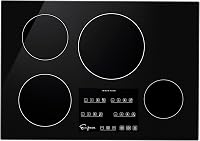
The Empava Ease is a 30-inch, hardwired drop-in model with 4 heating zones. Its overall dimensions are 30 in wide, 21 in deep, and 2.17 in high; those aren't the required cutout measurements.
It includes boost mode, individual zone timers, a child lock, and a residual heat display. These suit a main kitchen cooking station, where several dishes may need different heat levels and finish times.
Choose it for a planned installation after checking the cabinet, counter, and wiring. Skip it for a rental or temporary setup where permanent changes aren't practical or approved.
Ask for a quote that separates electrical work, countertop work, installation, and old-appliance removal. Our guide to choosing a built-in induction cooktop covers the measurements to confirm before ordering.
What extra costs belong in your induction budget?
Count only the additions your kitchen actually needs: compatible pans, electrical changes, fitting, and removal. Checking these first prevents a low appliance cost from hiding a larger project.
Check cookware before replacing a whole set
A magnet that sticks firmly to a pan's base is a useful first check for induction compatibility. Also look for a flat base and confirm that its diameter meets the cooktop's requirements.
The Duxtop requires magnetic cookware with a minimum base diameter of 5 in. Measure the bottom that touches the glass, since the pan's rim size can be larger.
Start with the saucepan and skillet you use most. Our guide to induction burner size and pan size explains why a wide pan doesn't always heat evenly over a smaller coil.
Check the circuit before choosing a plug-in unit
The Duxtop uses a 110/120 V, 15-amp outlet. A matching plug doesn't tell you what other appliances share that circuit or how much capacity remains.
Running another high-draw appliance on the same circuit can cause a trip. Check the manual and circuit capacity before setup; induction burner outlet and amp requirements explains what to look for.
Separate energy use from the upfront budget
Running cost depends on power draw, cooking time, and your electricity rate. Maximum wattage describes available power, not continuous consumption throughout every meal.
Shorter cooking or lower heat can reduce energy use, but savings depend on what you're replacing. Don't assume they will quickly cover new cookware or installation work.
How can setup and care prevent avoidable costs?
Use suitable pans, keep vents clear, and protect the glass from impact. These habits help avoid poor cooking results and preventable damage without buying extra accessories.
Set a portable unit on a stable, level surface with the ventilation space required by its manual. Keep it away from counter edges and places where someone could catch the cord.
Begin with moderate heat and adjust as the pan warms. A common mistake is using maximum power for every task, which can scorch food before you've learned the controls.
Avoid heating an empty pan for long periods. Induction can heat cookware quickly, and the glass can remain hot from contact with the pan after cooking stops.
Let the surface cool before wiping it with a soft cloth and a cleaner allowed by the manual. Lift heavy pans instead of dragging them, and keep abrasive pads away from the glass.
Keep touch controls dry when making adjustments. A timer is useful for reminders or shutoff, but it doesn't remove the need to watch a simmering pot.
Which induction cooktop should you choose for your budget?
Keep induction cooktop cost tied to the cooking job you need done. Choose the format first, then spend on controls and features you'll use often.
- Choose the Duxtop 9600LS for an extra everyday burner with varied power settings and convenient cooking buttons.
- Choose the Nuwave Flex for a small counter and recipes that call for frequent temperature changes.
- Choose the Nuwave Double Pro when two dishes need heat together often enough to justify its footprint.
- Choose the Empava Ease for a permanent four-zone installation with confirmed fitting and electrical requirements.
Before paying, write down the appliance, needed cookware, and setup work as separate items. If the total exceeds your budget, reconsider the format before giving up features that matter to your meals.
Use the full induction cooktop guide to confirm your choice against your space, pans, and daily routine.
Frequently asked questions
How much does an induction cooktop cost?
Induction cooktop cost depends mainly on the format and setup work. A portable single burner usually needs the smallest budget, while a built-in model can involve countertop fitting and electrical changes.
Compare the appliance, compatible cookware, installation, and removal costs together before deciding which type fits your kitchen.
Are portable induction cooktops cheaper to install?
Portable induction cooktops generally need less setup because they sit on a counter and plug into a suitable outlet. They avoid countertop cutting and hardwiring, but you still need to check circuit capacity, ventilation space, and cookware compatibility.
Any required electrical changes or replacement pans belong in your budget.
Do built-in induction cooktops need professional installation?
A hardwired built-in induction cooktop needs a qualified professional to assess and make its electrical connection. Countertop fitting may require a separate installer, especially if the opening needs changes.
Confirm the required cutout, wiring, cabinet clearances, and installation scope before ordering so each part of the job is covered.
What extra costs should I budget for with induction?
Budget for any compatible pans, electrical changes, countertop work, installation labor, and removal of an old appliance. You may need only some of these, depending on your kitchen.
Check what each quote includes, and avoid replacing a whole cookware set when a few suitable pans cover your meals.