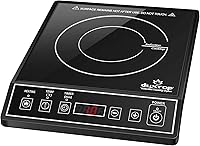
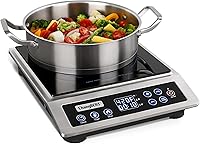
Duxtop 9600LS Induction Cooktop Review: Worth It? (October 2026)
The Duxtop 9600LS is a strong choice for everyday single-pan cooking, with touch controls, a long timer and separate power and temperature modes. Choose the 9100MC for push buttons or ChangBERT for frequent cooking with a commercial-use design.
On this page (11 sections)
- Who should buy the Duxtop 9600LS?
- What do the 9600LS controls actually help you do?
- What cookware fits the Duxtop 9600LS?
- How much counter space and power does it need?
- How should you set up the 9600LS for your first meal?
- Which common mistakes should you avoid?
- Is the Duxtop 9600LS easy to clean and maintain?
- Can the Duxtop 9600LS make a high-pitched sound?
- When is the Duxtop 9100MC the better choice?
- When should you choose ChangBERT instead?
- Should you buy the Duxtop 9600LS?
The Duxtop 9600LS is a strong choice for everyday single-pan cooking, especially if you want touch controls, separate power and temperature modes, and a long countdown timer. It suits an extra cooking spot beside your stove or a portable burner you put away after meals.
Choose it for the controls you'll use, rather than the number of settings alone. Your pans, available counter space and need for more than one cooking zone matter just as much.
Who should buy the Duxtop 9600LS?
The 9600LS suits home cooks who regularly use one pot or skillet at a time. It's also useful as a second cooking spot when your main stove is full.
Duxtop 9600LS Portable Induction Cooktop
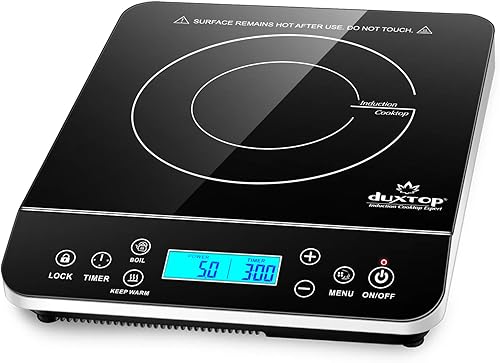
- 20 power levels from 100 to 1800 W
- 20 temperature settings from 100°F to 460°F
- Timer up to 10 hours
- Touch controls with LCD
A single burner for everyday meals or an extra cooking spot, with touch controls, fast boil and keep warm buttons. Its long timer suits dishes that need an extended countdown.
Pros
- Separate power and temperature modes
- Fast boil and keep warm shortcuts
- Child lock prevents accidental setting changes
- Long countdown timer
Cons
- Needs a magnetic cookware base at least 5 in across
- One cooking zone limits meal planning
- Layered cookware can produce high-pitched sounds
Think pasta sauce beside a busy range, soup in a small kitchen or a skillet meal where everything cooks in stages. The portable format makes sense when you want to reclaim counter space afterward.
The child safety lock helps prevent accidental changes to cooking and timer settings. It doesn't make a hot pan safe to touch or replace supervision around children.
When should you skip the Duxtop 9600LS?
Skip it if your usual dinner needs two pans heating together and you have no other cooking surface. Switching between a sauce and a boiling pot can make meal timing harder.
Our guide to single vs double induction cooktops helps you decide whether another cooking zone would be more useful than portability.
Also reconsider if most of your cookware lacks a magnetic base. Replacing several favorite pans changes the buying decision, even when the burner itself fits your kitchen.
What do the 9600LS controls actually help you do?
The 9600LS lets you choose between power output and a temperature setting, with shortcuts for boiling and keeping food warm. These controls serve different tasks, so learn both modes rather than treating them as interchangeable.
| Control or requirement | Duxtop 9600LS |
|---|---|
| Power levels | 20, from 100 to 1800 W |
| Temperature settings | 20, from 100°F to 460°F |
| Controls | Sensor touch panel with LCD |
| Countdown timer | Up to 10 hours |
| Keep warm | 1 to 30 minutes at 140°F |
| Fast boil | Dedicated button |
| Child safety lock | Prevents cooking and timer setting changes |
| Auto-pan detection | Shuts off after 60 seconds without suitable cookware |
| Cookware requirement | Magnetic bottom at least 5 in across |
| Dimensions | 11.4 in deep x 14 in wide x 2.5 in high |
| Weight | 6.2 lb |
| Electrical supply | 110/120 V, 15 amp outlet |
Use power mode to manage a boil or simmer
Power mode is a useful starting point for boiling water, reducing sauce or adjusting a simmer by sight. Increase output to bring liquid toward a boil, then reduce it once you reach the cooking pace you want.
Don't leave a pot at maximum power simply because the recipe began with high heat. Once boiling starts, extra heat can increase steam loss and boil-over risk without helping the dish.
Use temperature mode as a starting point
Temperature mode gives you a target setting, but the food still needs your attention. Pan material, food quantity and stirring affect how a dish cooks.
For gentle sauces or chocolate, start cautiously and watch for scorching. More preset choices don't promise that every pan will hold an exact food temperature.
The fast boil shortcut suits water-based tasks, while keep warm is for a short holding period. Use a food thermometer when you need to check the food itself.
What cookware fits the Duxtop 9600LS?
Choose a flat, magnetic-bottom pan that meets the minimum base size in the table above. Check the part touching the cooktop, not the wider rim.
A magnet should stick firmly to the base. Cast iron and some stainless steel cookware are common options, but stainless steel alone doesn't establish compatibility.
Plain aluminum, copper and glass won't work unless the cookware includes a suitable magnetic base. Check each pan rather than assuming a whole cookware set uses the same construction.
A broad skillet also needs more thought than a small saucepan. A pan can be compatible while extending beyond the main heating area, so give thick foods time and move them as needed.
Our guide to choosing a pan size for an induction burner explains why base size and heating area matter more than the rim measurement.
Before setting a heavy pot down, wipe grit from both surfaces. Lift cookware when moving it rather than dragging it across the glass.
How much counter space and power does it need?
Give the 9600LS a stable, dry surface and a suitable outlet, with room beyond its measured footprint for ventilation and safe pan handling. Follow the manual's clearance instructions.
Measure your counter with your usual pan in mind. A handle can project into a walkway, and a tall pot beneath a cabinet may leave too little room to stir or lift a lid.
Keep towels, paper and other loose items away from the appliance and its vents. A soft surface that blocks airflow is a poor place for a portable burner.
The electrical requirement also deserves attention before you choose a location. Other appliances on the same circuit can add to the load, even when they use a different wall outlet.
Avoid planning to run a kettle, toaster and burner together on one circuit. Our guide to how many watts an induction burner needs explains how cooking output relates to electrical demand.
How should you set up the 9600LS for your first meal?
Start with a compatible saucepan and a simple water-based task, such as heating water for pasta. This gives you a clear view of how the controls change the cooking pace.
- Read the manual's placement, electrical and cookware instructions.
- Put the burner on a level surface with the required clearances.
- Check that the pan base and glass surface are clean and dry.
- Center the pan, add water and select a cooking mode.
- Practice reducing the heat as the water reaches a boil.
- Turn the burner off when finished and let it cool before cleaning or storing it.
Don't begin by heating an empty pan at full power. Induction can heat compatible cookware quickly, and an empty pan gives you little time to judge the effect.
Keep utensils and ingredients ready before starting a skillet dish. If food browns faster than expected, reduce output promptly instead of waiting for the next recipe step.
The guide to using an induction cooktop covers everyday operation in more detail.
Which common mistakes should you avoid?
The biggest mistakes are using unsuitable cookware, applying too much heat and expecting the timer to manage the whole meal. A few habits prevent most avoidable cooking problems.
Assuming a low setting means a steady simmer
Judge a simmer by the liquid, not just the number on the display. A small amount of sauce in a thin pan behaves differently from a full pot of soup.
Stir, watch the bubbles and adjust as the dish thickens. If delicate food catches easily, use a gentler setting or a cooking method such as a water bath.
Treating a long timer as unattended cooking
A countdown helps track time, but it doesn't stir food or replace lost liquid. Stay nearby and check dishes that can dry out, foam up or stick.
The long timer is most useful when it saves you from repeatedly resetting a shorter countdown. It doesn't change the care a recipe needs.
Confusing pan detection with a child lock
Pan detection responds to missing or unsuitable cookware, while the lock helps protect selected settings. Neither feature removes heat already stored in the pan or glass.
Turn the burner off deliberately when cooking ends. Keep the pan handle positioned safely while everything cools.
Is the Duxtop 9600LS easy to clean and maintain?
The glass surface is straightforward to wipe once cool, provided you clean spills before residue builds up. Heat transfers back from the pan, so the surface can remain hot after cooking stops.
Use a soft cloth and a cleaner allowed by the manual. Avoid abrasive pads, scraping tools or excess water around controls and openings.
For stuck food, follow the approved cleaning method rather than scrubbing harder. Dry the surface before the next use and check the pan base for grease or grit.
Let the appliance cool fully before putting it in a cabinet. Store it where heavy cookware won't fall onto the glass, and avoid trapping the cord beneath it.
Can the Duxtop 9600LS make a high-pitched sound?
Yes, layered cookware can produce high-pitched sounds during induction cooking. Duxtop specifically notes that pans made with several metal layers may cause this.
Try another compatible pan to see whether the sound changes. Adjusting power may also change cookware noise, but don't keep using an appliance that shows an error or behaves unusually.
For more help separating cookware sounds from problems that need attention, read why induction cooktops make noise.
When is the Duxtop 9100MC the better choice?
Choose the 9100MC if you prefer push buttons and don't need an extended countdown. It offers the same power and temperature ranges as the 9600LS, so control style is a stronger reason to choose between them than maximum output.
Its large display suits cooks who want a clear view of selected settings. It makes sense for routine meals that finish well within its timer limit.
Check your counter before choosing it, though. At 12.7 in deep, 16.3 in wide and 3.8 in high, it needs more space than the 9600LS.
Skip the 9100MC if reducing storage bulk is your priority or you regularly want a longer countdown. Neither Duxtop solves the need to cook two dishes at once.
The Duxtop 9600LS vs 9100MC comparison gives these differences a closer look.
When should you choose ChangBERT instead?
Choose ChangBERT for frequent batch cooking if its physical controls, metal housing and continuous-duty design match your routine. ChangBERT identifies this model as NSF certified and designed for commercial use.
Its continuous-duty circuitry is the main reason to consider it for repeated cooking sessions. The physical buttons also suit someone who strongly prefers a tactile response to touch controls.
It offers 9 power levels from 200 to 1800 W and 18 temperature settings from 120°F to 460°F. Skip it if the Duxtop's lower starting settings and wider preset choice matter more to your cooking.
ChangBERT provides a 2-year limited warranty for home use and a 1-year limited warranty for commercial use. Choose based on the intended use rather than assuming both uses have the same coverage.
Should you buy the Duxtop 9600LS?
Buy the Duxtop 9600LS for varied home cooking when you want touch controls, a long countdown and a burner you can store after use. Before ordering, check your most-used pan, measure its storage space and plan a typical meal around one cooking zone.
Pick the 9100MC if buttons feel more natural and its shorter timer covers your meals. Choose ChangBERT if repeated cooking sessions and its commercial-use design matter more than extra preset choices.
If you're still deciding between a portable burner and another cooktop format, start with our induction cooktop buyer's guide. For other single-burner choices, browse the best portable induction cooktops.
Frequently asked questions
Is the Duxtop 9600LS a good induction cooktop?
Yes, the Duxtop 9600LS is a good fit for everyday single-pan meals or an extra cooking spot. Its touch controls, separate cooking modes and long timer suit varied tasks, but you should choose another format if most meals need two pans heating at once.
What cookware works with the Duxtop 9600LS?
Use cookware with a magnetic bottom at least 5 in across. A magnet should stick firmly to the cooking base, but also check the cookware's induction guidance and measure the base rather than the rim.
Plain aluminum, copper and glass cookware without a compatible magnetic base won't work.
How long is the Duxtop 9600LS timer?
The Duxtop 9600LS countdown timer runs up to 10 hours. Its separate keep warm function runs for 1 to 30 minutes at 140°F, so these controls serve different purposes.
A long countdown does not replace checking liquid levels, stirring when needed or staying nearby while food cooks.
Does the Duxtop 9600LS make noise?
Yes, cookware can produce high-pitched sounds on the Duxtop 9600LS, especially when its base contains several metal layers. A different compatible pan or a lower power setting may change the sound.
Stop cooking and follow the manual if noise comes with an error, burning smell or unusual operation.