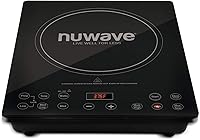
Duxtop vs Nuwave Induction Cooktop: Which Is Better? (October 2026)
For the Duxtop vs Nuwave induction cooktop choice, pick Duxtop for everyday cooking and timed recipes or Nuwave for small kitchens and fine heat adjustments. Check your cookware and available counter space before deciding.
On this page (11 sections)
- Duxtop vs Nuwave induction cooktop: what is the main difference?
- Who should buy the Duxtop 9600LS, and who should skip it?
- Who should buy the Nuwave Flex, and who should skip it?
- How should you use power and temperature modes?
- Which cooktop fits your counter and cookware?
- Are Duxtop and Nuwave compatible with a standard outlet?
- How do you set up and use either burner well?
- How do you clean and care for these cooktops?
- Which common mistakes should you avoid?
- FAQ
- Which Duxtop vs Nuwave induction cooktop should you choose?
Choose Duxtop for a regular extra burner and timed cooking, or Nuwave for a smaller counter and fine heat adjustments. This Duxtop vs Nuwave induction cooktop comparison comes down to the controls you'll use, the pans you already have and the space available.
Both are portable, single-zone induction cooktops with touch controls. Neither replaces a multi-burner stove if your meals depend on cooking several dishes at once.
Start with your most common task: boiling pasta, tending a sauce or making dinner in a tight kitchen. That gives you a better buying rule than choosing the longest feature list.


Duxtop vs Nuwave induction cooktop: what is the main difference?
Duxtop offers more emphasis on power control and timed routines; Nuwave offers finer temperature selection in a smaller body. Choose the one that removes a problem from your usual cooking.
The Duxtop 9600LS has 20 power levels from 100 to 1800 W, plus 20 temperature settings from 100°F to 460°F. Its separate modes let you choose either a power level or a temperature target.
The Nuwave Flex offers 100°F to 500°F in 5°F steps. You can also change its temperature and add or deduct cooking time while it runs.
Those small steps give you more choices at the controls, but they don't measure the temperature inside your food. Pan material, food quantity and stirring still affect the result.
For a first portable burner, Duxtop is the stronger general choice. The Flex makes more sense when compact size or frequent small heat changes are your main reason for buying.
Who should buy the Duxtop 9600LS, and who should skip it?
Buy Duxtop for routine meals, an extra cooking station or recipes that benefit from a long timer. Its controls suit a mix of boiling, simmering and short periods of keeping food warm.
The timer runs for up to 10 hours, and dedicated fast boil and keep warm buttons reduce the steps needed for common tasks. The keep warm function runs for 1 to 30 minutes at 140°F.
That combination fits a cook who wants to boil water, lower the heat and track a cooking period on the same unit. A timer helps manage the task, but long cooking still needs supervision and checks on liquid levels.
The child safety lock prevents accidental changes to cooking and timer settings after they're set. Learn how to release it before starting, so you can respond quickly if a pan threatens to boil over.
Skip Duxtop if counter space is your main constraint or you specifically want finer temperature selection. Don't buy it solely for the highest power setting if most of your cooking uses a small saucepan at low heat.
Read our Duxtop 9600LS review for a closer look at its features. If you've already settled on the brand, the Duxtop 9600LS vs 9100MC comparison covers that narrower choice.
Who should buy the Nuwave Flex, and who should skip it?
Buy the Flex for a tight kitchen or recipes where you prefer small, deliberate heat adjustments. Its in-use controls suit cooks who adjust a dish as its texture changes.
A sauce may need less heat as it thickens, while another dish may need extra time before serving. Being able to change either setting without restarting helps keep those adjustments simple.
The Flex has a ceramic glass cooking surface. Treat it with the same care you'd give other glass cooktops: lower pans gently and avoid dragging rough cookware across it.
Skip it if your main priority is maximum power for large pots. Duxtop's ceiling is higher than either of the conflicting 1300 W and 1400 W figures supplied for the Flex; confirm the Flex's requirements with Nuwave before planning a limited-power setup.
Don't choose it just because the word “precision” suggests automatic results. Fine control steps help you make changes, but you still need to watch the pan and judge the food.
How should you use power and temperature modes?
Use power control to manage heat input and temperature control to select a target setting. Neither removes the need to watch how your particular pan responds.
For a pot of water, higher power is useful while bringing it toward a boil. Reduce the setting once the cooking task changes, rather than leaving it high because the pot can hold it.
For sauces, start gently and raise the heat in small stages. A thick sauce can scorch against the pan even when the surface doesn't look very active.
Duxtop vs Nuwave induction cooktop controls for low heat
Nuwave suits cooks who want small temperature changes; Duxtop suits cooks comfortable choosing among preset levels. Both still depend on cookware that spreads heat well.
Portable induction burners may cycle power at low settings. The selected number alone won't tell you whether a thin pan will maintain the gentle simmer you want.
Watch the food, stir when the recipe calls for it and allow a change to take effect before adjusting again. Repeatedly raising and lowering the controls can make it harder to find a steady setting.
For more on matching power to your meals, see how many watts an induction burner needs. Our portable induction cooktop guide covers the broader buying choices.
Which cooktop fits your counter and cookware?
The Flex takes less counter space, but the pan and ventilation clearance determine the working space you need. Measure the cooking setup, not just the empty appliance.
The Flex measures 12 W x 10 D x 2 H inches, compared with 14 W x 11.4 D x 2.5 H inches for Duxtop. Leave the clearances required by the chosen model's manual.
Set your usual pan in the planned spot and check where its handle will point. You need room to stir, lift the lid and move the pan without reaching across another hot appliance.
Duxtop requires a magnetic cookware base at least 5 inches in diameter. Its pan detection shuts the unit off after 60 seconds if cookware is absent or incompatible.
For either model, check the flat base rather than the wide rim when judging fit. A frying pan's named size can be much larger than the part that touches the cooktop.
A magnet should stick firmly to the base of suitable cookware. Plain aluminum, copper and glass generally need an induction-compatible base to work; stainless steel compatibility varies.
Follow the Flex manual for its permitted cookware sizes. Our guide to induction burner and pan size explains why a wide cooking surface doesn't promise even heat across a wide pan.
If dinner usually needs 2 pans at once, compare a single burner with a double induction cooktop before choosing either model.
Are Duxtop and Nuwave compatible with a standard outlet?
Both use 120 V, and Duxtop specifies a 110/120 V, 15 amp outlet. Check the circuit as well as the socket before choosing a cooking spot.
A nearby outlet may share its circuit with a microwave, kettle or another appliance. Running several high-draw appliances together can overload that circuit even when each plug fits.
Confirm the requirements in the manual, especially for an RV, inverter or other setup with limited available power. Don't assume a smaller cooktop automatically has the electrical requirements your setup needs.
Keep the cord away from heat, water and walking paths. Use an extension cord, adapter or power strip only if the manufacturer permits that arrangement.
Our guide on whether an induction burner can use any outlet explains the checks to make before plugging one in.
How do you set up and use either burner well?
Start on a level, heat-resistant surface with clear vents and compatible cookware centered over the cooking zone. Read the manual before the first meal so the controls don't distract you from a hot pan.
Wash and dry the pan's base, then check that the cooktop surface is clean. Grit trapped underneath cookware can scratch glass when the pan moves.
Begin with a simple task such as heating water, and practice changing the setting, setting the timer and stopping the heat. This helps you learn the controls before working with oil or a sauce that can scorch.
Use moderate heat for a first attempt with an unfamiliar pan. Avoid leaving empty cookware on high heat, since induction can heat a compatible base quickly.
When cooking, keep handles turned away from the counter edge without placing them over another heat source. Center heavy pots before filling them, and avoid cookware that sits unevenly or rocks.
Our guide to using a portable induction cooktop walks through the basic cooking sequence.
How do you clean and care for these cooktops?
Let the cooktop cool, unplug it and clean it according to its manual. Glass can stay hot from contact with cookware after the heating stops.
Remove spills with a soft cloth and an approved cleaner rather than scraping with a rough pad. Apply cleaner to the cloth when instructed, and keep liquid out of vents and electrical openings.
Lift pans instead of sliding them, especially if their bases are rough. Before storing the burner, make sure the surface is cool and dry.
Keep air openings clear of crumbs, grease and nearby objects. Store the unit where heavy cookware won't fall onto its glass surface or press against its controls.
Which common mistakes should you avoid?
Avoid judging these burners by a temperature number, the size of the glass or wattage alone. Each describes only part of the cooking setup.
- Choosing a pan by its rim width. Check the magnetic base and the model's size guidance.
- Expecting a wide pan to heat evenly everywhere. Heat spread depends partly on the pan's construction and its match to the cooking zone.
- Treating a selected temperature as food temperature. Use a food thermometer when the recipe requires one.
- Using maximum heat for every task. Lower the setting when moving from boiling or browning to gentler cooking.
- Treating a long timer as permission to leave. Check food, liquid levels and the surrounding area throughout cooking.
Also expect that some cookware can make a high-pitched sound on induction. A sound change alone isn't a reason to keep raising the heat; check pan placement and follow the manual if operation seems abnormal.
FAQ
The right choice depends on your cooking routine, cookware and space. These answers settle the remaining fit and control questions.
Is Duxtop or Nuwave better for induction cooking?
Duxtop is the better fit for a general extra burner, while Nuwave suits cooks who put counter space and fine temperature adjustments first. Match the choice to a meal you make often: boiling and timed cooking favor Duxtop's controls; frequent small heat changes favor the Flex.
Which has more power, the Duxtop or Nuwave?
Duxtop has the higher maximum power. Nuwave's Flex information includes conflicting wattage figures, so confirm the exact model's requirements before planning a limited-power setup; maximum power helps compare heating capacity, but it doesn't tell you how gently a particular pan will simmer or how evenly its base will heat.
Can both cooktops use any pan?
No, both need induction-compatible cookware that also meets the model's size requirements. A magnet sticking firmly to the base is a useful first check, but it doesn't confirm pan fit; check the flat base, center the pan and follow the manual's guidance before cooking with it.
Can you change settings while cooking on both models?
Nuwave explicitly supports changing temperature and cooking time while the Flex runs, without restarting. Duxtop has touch controls and a lock that prevents accidental changes once enabled; learn the control sequence before cooking, especially how to release the lock when you need to reduce heat quickly.
Which induction cooktop is easier to fit on a small counter?
The Nuwave Flex is easier to fit because its body is narrower, shallower and lower than the Duxtop's. Measure the cooking area with your usual pan in place, then allow the ventilation clearance required by the manual; a unit that fits in storage may still crowd the counter during use.
Which Duxtop vs Nuwave induction cooktop should you choose?
Choose Duxtop if your priority is a versatile extra burner; choose Nuwave if compact size and frequent heat adjustments lead your decision. Picture the meal you'll cook most often, then check the pan and counter space that meal needs.
Skip both if your cookware won't work with induction or you routinely need several pans cooking together. The induction cooktop buyer's guide covers the wider category, and ENERGY STAR's electric cooking guidance explains the background.
If neither model fits your routine, compare the best portable induction cooktops for other control layouts and sizes.
Frequently asked questions
Is Duxtop or Nuwave better for induction cooking?
Duxtop is the better fit for a general extra burner, while Nuwave suits cooks who put counter space and fine temperature adjustments first. Match the choice to a meal you make often: boiling and timed cooking favor Duxtop's controls; frequent small heat changes favor the Flex.
Which has more power, the Duxtop or Nuwave?
Duxtop has the higher maximum power. Nuwave's Flex information includes conflicting wattage figures, so confirm the exact model's requirements before planning a limited-power setup.
Maximum power helps compare heating capacity, but it doesn't tell you how gently a particular pan will simmer or how evenly its base will heat.
Can both cooktops use any pan?
No, both need induction-compatible cookware that also meets the model's size requirements. A magnet sticking firmly to the base is a useful first check, but it doesn't confirm pan fit.
Check the flat base, center the pan and follow the manual's guidance before cooking with it.
Can you change settings while cooking on both models?
Nuwave explicitly supports changing temperature and cooking time while the Flex runs, without restarting. Duxtop has touch controls and a lock that prevents accidental changes once enabled.
Learn the control sequence before cooking, especially how to release the lock when you need to reduce heat quickly.
Which induction cooktop is easier to fit on a small counter?
The Nuwave Flex is easier to fit because its body is narrower, shallower and lower than the Duxtop's. Measure the cooking area with your usual pan in place, then allow the ventilation clearance required by the manual.
A unit that fits in storage may still crowd the counter during use.